


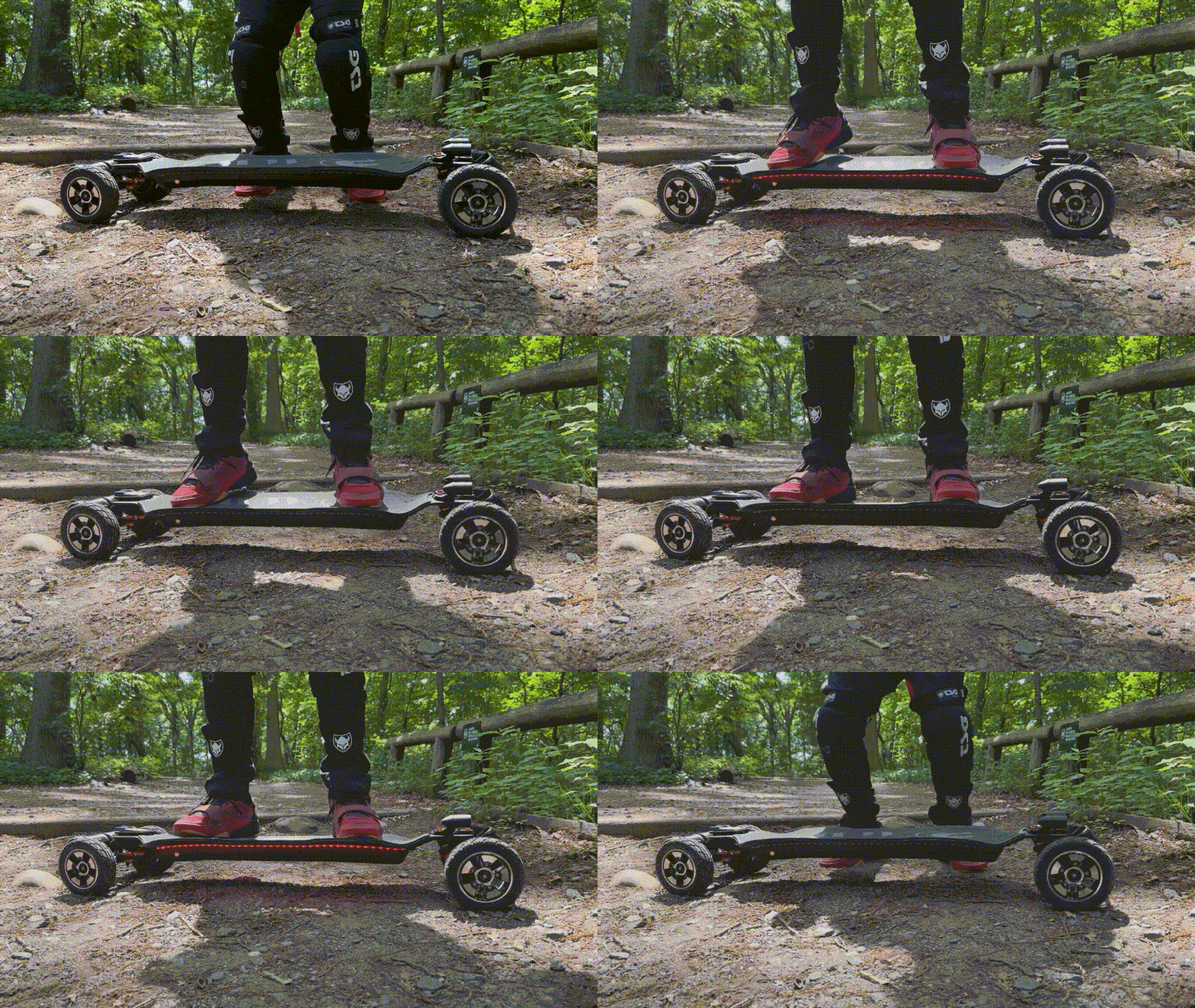

Short answer: rider weight does not change just one number on an electric skateboard. A heavier combined load usually requires more energy during starts and climbs, can reduce real-world range, changes braking margin, increases tire deflection and makes the same deck feel softer. There is no honest universal rule such as “every extra 10 kg reduces range by X%.” Speed, hills, wind, temperature, wheel setup, tire pressure and riding style can matter just as much.
This guide explains the mechanisms and the setup checks that matter. If you need a distance estimate for a specific route, use the electric skateboard range calculator. If you are comparing boards for a higher rider weight, use the separate heavy-rider electric skateboard guide.
What Rider Weight Changes on an Electric Skateboard
The useful number is the total moving load: rider, protective gear, backpack or cargo, and the board itself. As that total rises, the drivetrain must do more work whenever the board accelerates or gains elevation.
| Area | Typical effect as total load increases | What the rider should do |
|---|---|---|
| Range | More energy is used during repeated starts and climbs. | Plan a larger battery reserve and compare rides under similar conditions. |
| Acceleration | The same drive system may feel less urgent because it is moving more mass. | Use smooth throttle inputs and avoid judging performance from one launch. |
| Climbing | Gravity creates a larger continuous load on motors, controller and battery. | Reduce speed or route steepness when the system is working hard. |
| Braking | More kinetic energy must be managed, especially downhill. | Brake earlier, keep more space and avoid beginning a long descent with a completely full battery. |
| Tires and deck | Tires compress more and the same deck flexes more. | Check pressure, tire condition and the correct deck-flex band. |
Why Rider Weight Changes Real-World Range
At a steady speed on a flat, smooth road, aerodynamic drag and rolling resistance consume much of the energy. Extra mass still matters, but its effect becomes more obvious when the ride includes frequent acceleration, elevation changes, soft tires, rough surfaces or repeated stop-and-go traffic.
That is why two riders can use the same board and finish with different battery percentages without either result being “wrong.” For a useful comparison, keep the following variables as consistent as possible:
- rider plus cargo weight;
- average speed and speed mode;
- route elevation and number of stops;
- wheel type, wheel diameter and pneumatic tire pressure;
- temperature, wind and road surface;
- battery state, age and charging condition.

Use range claims as a reference tied to their test conditions, not as a promise for every rider. A practical route plan should also retain a reserve for wind, detours, colder weather and battery sag near the end of a ride.
Acceleration, Hills and Heat
More total mass requires more force for the same acceleration. The result is simple: a board may feel less punchy with a heavier rider even though the hardware has not changed. Repeated hard launches also draw more current than smooth starts.
On a climb, the drivetrain must continuously lift the combined mass against gravity. A steeper or longer hill can therefore increase current draw and heat more quickly than a short flat-road acceleration. If power begins to fade, the board feels unusually hot, or the controller reports a warning, reduce load and allow the system to cool. For route choice, gearing and descent planning, see the electric skateboard hill-climbing guide.
Braking and Stopping Margin
A heavier moving system carries more kinetic energy at the same speed. Electric braking must manage that energy through the motors, controller and battery, while tire grip and road conditions limit how much braking force can be used safely.
Do not treat remote braking like an instant stop button. Brake progressively, shift your stance before you need strong deceleration and leave more room as speed, load or downhill grade increases. A fully charged battery can also have less room to accept regenerative energy on a descent. The beginner electric skateboard braking guide explains stance, practice drills and downhill precautions in detail.
Tires, Wheels and Pressure
Rider weight changes how much a pneumatic tire deforms. Too little pressure for the actual load can increase rolling resistance, heat and the risk of tire or tube damage. Too much pressure can reduce comfort and grip on rough pavement. Pressure should therefore be checked cold and adjusted within the tire and wheel manufacturer’s limits for the rider, route, temperature and setup.
For OMW pneumatic setups, a practical starting reference is 30 PSI for 150 mm tires and 36 PSI for 175 mm tires. These are starting points, not universal targets. Inspect the sidewall, tube and wheel condition before riding, and use the OMW tire pressure, wear and replacement guide for the full maintenance process.

Wheel diameter is not the only factor. Tire construction, compound, pressure, gearing and road texture all matter. Avoid changing wheel size without confirming pulley, belt and clearance compatibility.
Deck Flex and Ride Feel
The same deck does not feel the same under every rider. As rider weight increases, deck movement generally becomes more noticeable. More flex can improve comfort and road isolation, but excessive movement can feel vague at speed or create unwanted clearance changes. A firmer setup can feel more planted, although it may transmit more vibration.
When two flex options overlap your weight, choose based on the ride you want:
- Higher-flex option: more deck movement and comfort.
- Lower-flex option: firmer support and a more stable platform preference at speed.
Weight is the starting point, not the only input. Stance width, road surface, wheel setup and personal preference matter too. For materials, shapes and a deeper selection process, see the electric skateboard deck guide.
OMW Test Examples and Flex Bands
The table below shows two published OMW test examples. Both were recorded with an approximately 154 lb / 70 kg rider, at about 14 mph / 22.4 km/h in speed mode 2, on a flat road with light wind at approximately 86°F / 30°C. They are useful comparison points—not predictions for a different rider, route or wheel setup.
| OMW setup | Battery | Published test result | Use the result for |
|---|---|---|---|
| Cavalry + 175 mm pneumatic | Samsung 50S 12S4P, 20 Ah, 864 Wh | 34 mi / 55 km | A conditioned baseline for route planning |
| Hussar + 150 mm pneumatic | Samsung 50S 12S3P, 15 Ah, 648 Wh | 28 mi / 45 km | A conditioned baseline for route planning |
OMW’s current rider-weight flex references are:
| Model | High Flex | Medium Flex | Low Flex |
|---|---|---|---|
| Cavalry | Up to 165 lb / 75 kg | 147–202 lb / 67–92 kg | 187–330 lb / 85–150 kg |
| Hussar | Up to 154 lb / 70 kg | 132–198 lb / 60–90 kg | 176–330 lb / 80–150 kg |
The overlapping bands are intentional: they let riders choose between more movement and a firmer platform. They should not be read as an automatic guarantee of range or comfort.
A Practical Setup Checklist for Your Weight
- Count the full load. Include riding gear, backpack and cargo—not only body weight.
- Confirm the board’s published load limit. Staying under a maximum is necessary, but it does not tell you which deck flex or wheel setup will feel best.
- Select the correct deck-flex band. Use preference to resolve overlap, then check clearance while standing naturally on the board.
- Set tire pressure for the actual setup. Check pneumatic tires cold and inspect for cuts, wear or leaks.
- Plan range with reserve. Do not transfer a 70 kg test result directly to a different rider and route.
- Practice acceleration and braking gradually. Learn how the board responds before riding near traffic or on steep roads.
- Reduce stress on long climbs and descents. Use smooth inputs, monitor warnings and allow cooling time when needed.
- Ride only in suitable conditions. OMW does not recommend riding in rain or on wet roads.
Frequently Asked Questions
Does a heavier rider always get less range?
Usually, a higher total load increases energy use, especially with hills and repeated acceleration. But there is no fixed percentage that applies to every board and route. A lighter rider traveling faster into a headwind can sometimes use more energy than a heavier rider cruising slowly on a flat, sheltered road.
Does rider weight reduce electric skateboard top speed?
Weight is more noticeable in acceleration and climbing than in a simple no-wind top-speed claim. Real top speed also depends on voltage, gearing, wheel diameter, motor capability, controller limits, battery state, road and aerodynamic drag. Do not use top-speed testing as a substitute for checking load limits and braking distance.
Should a heavier rider use harder tires or higher pressure?
Not automatically. Pneumatic pressure may need adjustment for load, but it must remain within the tire and wheel limits and still provide suitable grip and comfort. Solid or urethane wheel feel depends on compound, diameter and construction—not only hardness.
Which matters more for range: rider weight or wheel size?
There is no universal winner. Rider weight, wheel and tire construction, pressure, gearing, speed, hills and surface interact. Compare complete setups under the same route and riding conditions rather than isolating one specification.
How much battery reserve should I keep?
Keep enough margin for the route, conditions and your experience level. Increase that reserve for hills, cold weather, headwinds, unfamiliar roads or a heavier load. Avoid planning a ride that depends on reaching the exact published maximum.