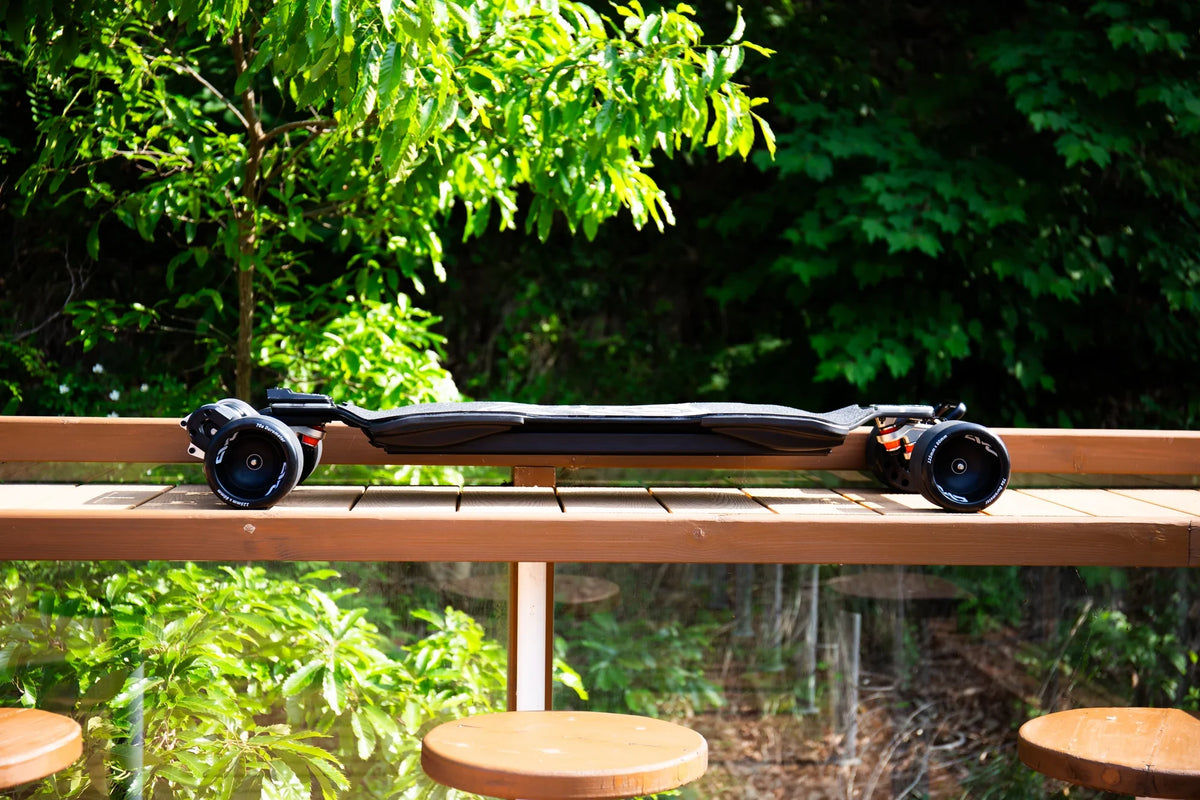


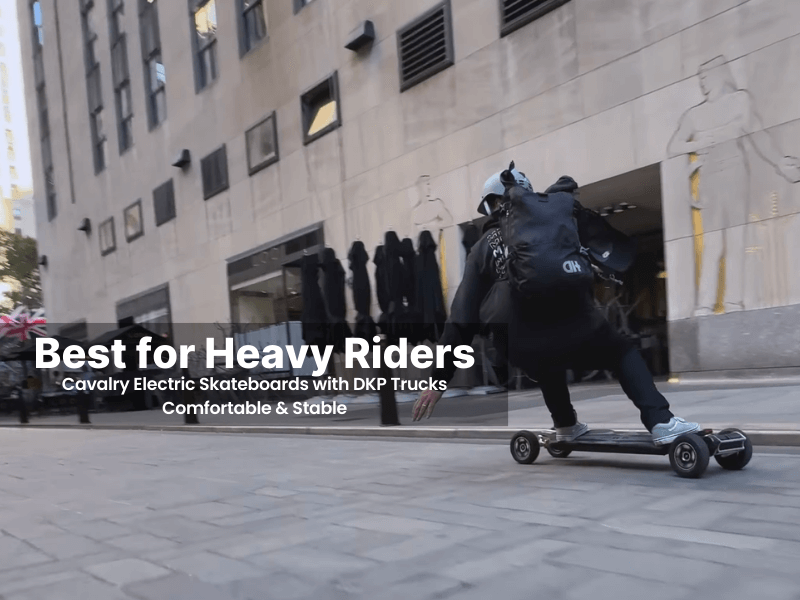
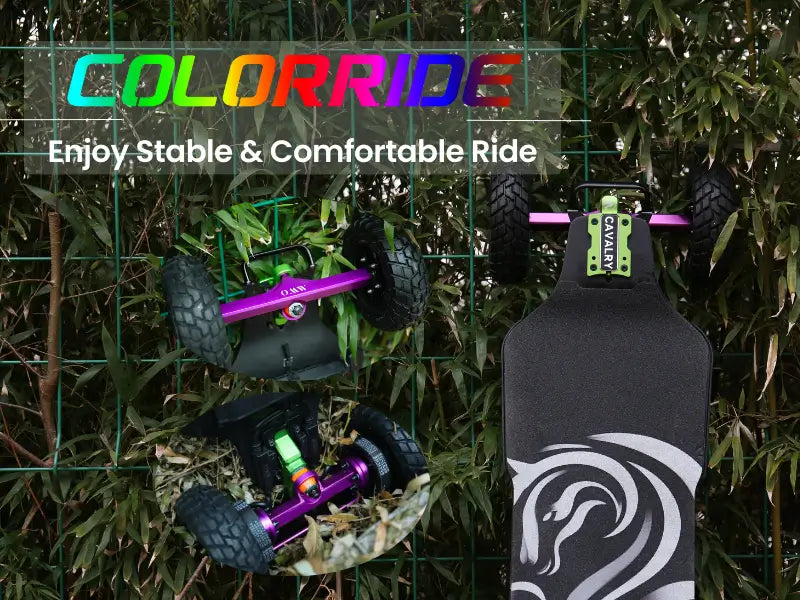

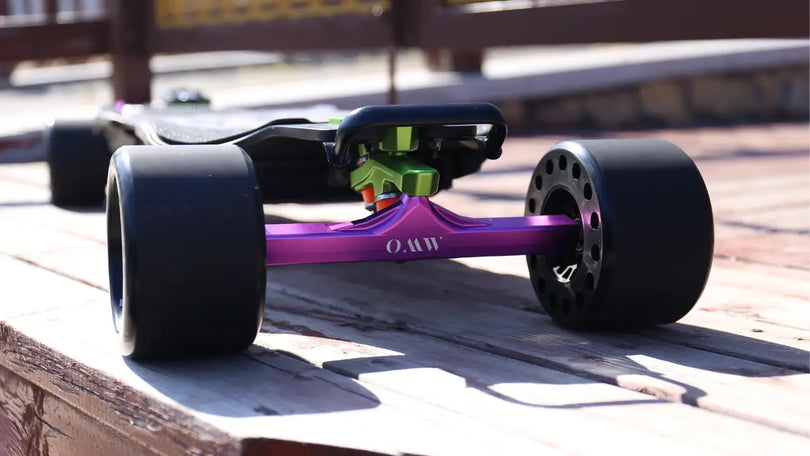
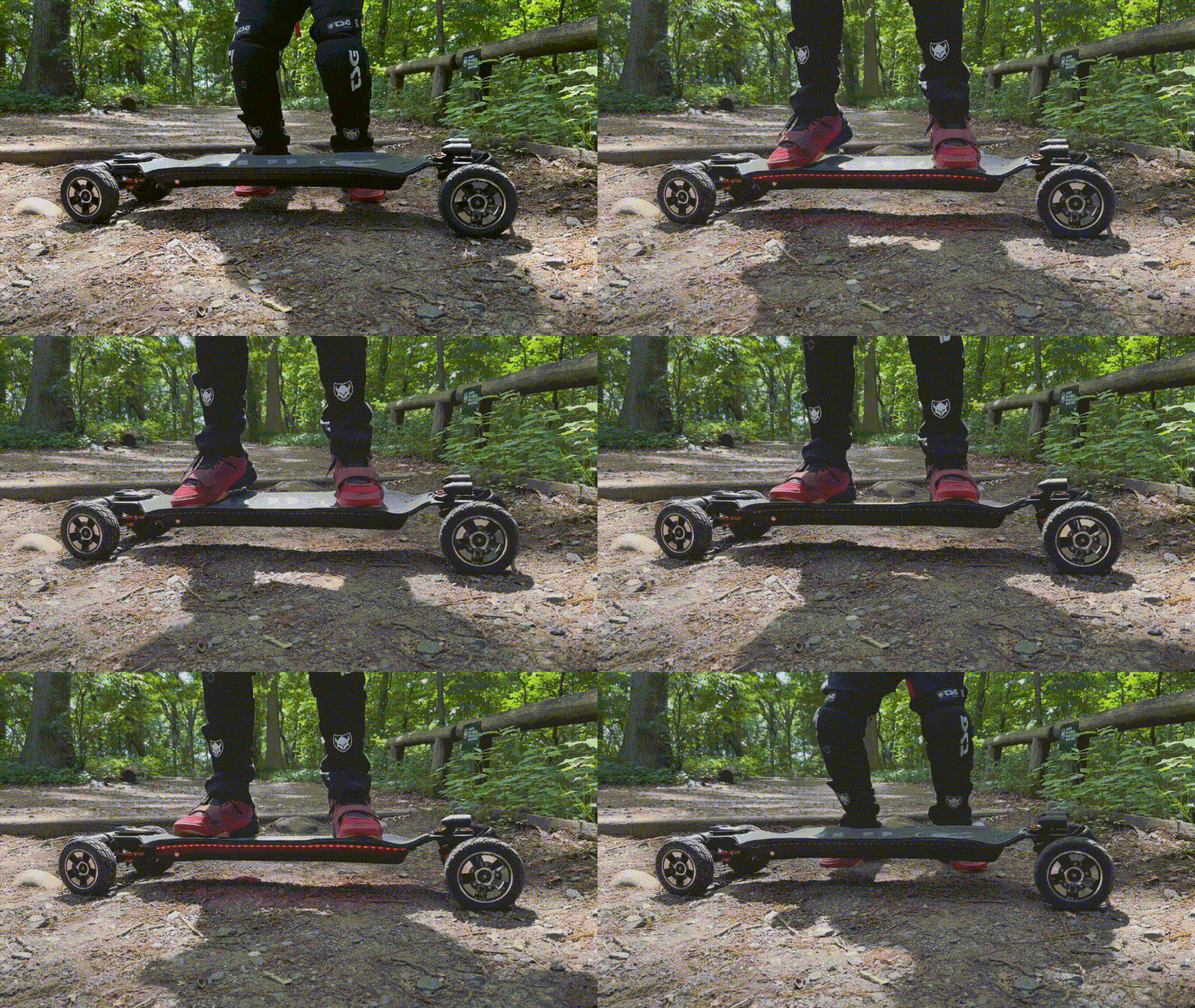

Short answer: A suitable all-terrain electric skateboard with pneumatic tires can handle dry, hard-packed gravel, firm grass, maintained dirt paths and broken pavement when the rider reduces speed and leaves extra room to turn and stop. Loose gravel, deep or wet grass, mud, deep sand, large rocks and wet roads are different conditions; they can reduce traction or exceed the board's clearance and should be avoided.
The surface matters as much as the board. Before riding, look at how loose the ground is, whether obstacles are hidden, how much space you have to brake and whether the route stays dry. An “all-terrain” label does not make every unpaved surface suitable.
Which surfaces can an electric skateboard ride on?
| Surface | Practical answer | What to watch |
|---|---|---|
| Broken or patched pavement | Usually suitable for a matched street or pneumatic setup | Potholes, sharp edges, loose debris and reduced braking space |
| Dry, hard-packed gravel | Possible on an all-terrain board at reduced speed | Loose stones, changing grip and wheel deflection |
| Loose or deep gravel | High risk; avoid when the wheels sink or slide | Sudden loss of traction and poor steering response |
| Firm, dry, short grass | Possible with pneumatic tires and enough clearance | Hidden holes, roots, drag and shorter usable range |
| Wet grass or mud | Do not ride | Very low grip, hidden obstacles and water exposure |
| Dry, maintained hard-packed dirt | Suitable for many all-terrain setups | Dust, ruts, stones and surface changes after traffic |
| Deep sand or large loose rock | Generally unsuitable | Wheel sink, drivetrain load and loss of control |

Why unpaved surfaces change the ride
On smooth pavement, the tire contact patch is relatively consistent. Gravel, grass and dirt move under the wheels or hide small obstacles, so traction can change within a few feet. Four effects matter most:
- Grip: loose material can move under the tire during acceleration, cornering or braking.
- Rolling resistance: grass, soft dirt and rough gravel require more energy than smooth pavement.
- Clearance: larger wheels can pass over cracks and small edges more easily, but they cannot make deep holes or large rocks disappear.
- Stopping distance: braking response depends on available traction, so riders need more space and smoother input on uncertain surfaces.
These effects are why a route that looks short on a map may feel more demanding than a longer paved ride.
Can an electric skateboard ride on gravel?
Yes, a properly configured all-terrain electric skateboard can ride on dry, hard-packed gravel. The important distinction is between a firm gravel road and a deep layer of loose stones. If the wheels leave deep tracks, stones roll freely underfoot or the route slopes sharply, traction and steering become much less predictable.
Enter a gravel section more slowly than you would ride on pavement. Keep acceleration, steering and braking smooth, avoid sudden direction changes and leave additional space before intersections or obstacles. If the board begins to push stones sideways or the front wheels wander, reduce speed and return to firmer ground.
Can an electric skateboard ride on grass?
A full-size board with pneumatic tires can cross firm, dry, short grass, but grass creates two problems that are easy to underestimate. It adds drag, and it can hide holes, roots, rocks or wet patches. Walk an unfamiliar section first and keep the ride short enough that you can return to a known surface.
Do not treat wet grass as a normal all-terrain surface. Wet grass can provide very little cornering or braking grip, while moisture and hidden mud add risks that an IP rating does not remove.
What about potholes and rough pavement?
Broken pavement is one of the strongest reasons to consider pneumatic tires. Air pressure helps soften sharp cracks and patchwork edges, while a larger diameter provides more clearance. However, a pneumatic tire is not permission to ride directly into a pothole. Scan ahead, choose a clear line and slow down before the obstacle rather than braking hard while crossing it.
If most of your route is paved and only moderately rough, a 150mm pneumatic setup may provide enough cushioning without the taller feel of a 175mm setup. For repeated rough sections, deeper cracks and more clearance, 175mm may be the better starting point.
Can an electric skateboard ride on dirt paths?
Dry, maintained and hard-packed dirt is generally more predictable than deep sand, mud or loose rock. Even so, ruts and dust can change wheel grip quickly. Slow down before blind corners, keep away from trail users and turn back if the surface becomes soft, wet or deeply uneven.
Conditions can also change between rides. A firm path can become muddy after rain or loose after heavy traffic, so yesterday's successful route is not proof that today's surface is suitable.
Which surfaces should riders avoid?
- Wet roads, wet grass, mud and standing water
- Deep sand or soft ground where the wheels sink
- Large loose rocks, technical trails and steep uneven descents
- Routes with hidden holes, roots or drop-offs
- Busy areas without enough room to stop or move away from pedestrians
OMW does not recommend riding its boards in rain or on wet roads. Water-resistance ratings describe enclosure performance under controlled conditions; they do not restore tire grip or guarantee protection in every wet riding situation.
Should you use 150mm or 175mm pneumatic tires?
| Wheel setup | Best starting point | Main tradeoff |
|---|---|---|
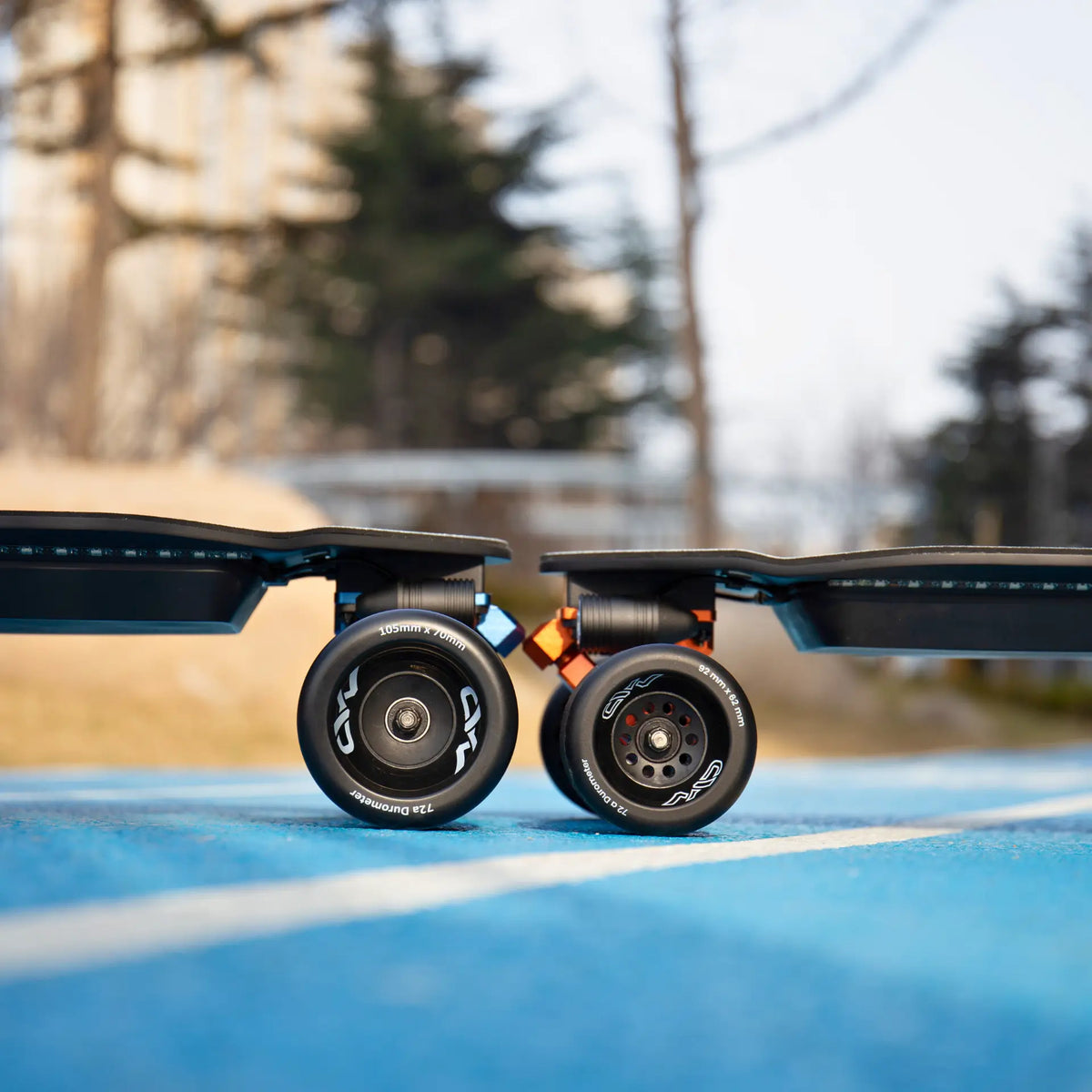
| 150mm pneumatic | Rough streets, broken pavement and short gravel or dirt connectors | Less clearance than 175mm |
| 175mm pneumatic | Frequent rough sections where rollover ability and clearance matter more | Taller, heavier and more terrain-focused feel |
OMW uses 150mm pneumatic tires as the standard Hussar setup and currently recommends 30 PSI for those tires. OMW uses 175mm pneumatic tires as the standard Cavalry setup and currently recommends 36 PSI. Follow the specification for the exact tire and complete configuration; do not deliberately reduce pressure below the recommendation in an attempt to create more grip.


If you are comparing street and pneumatic options, the OMW electric skateboard wheel guide covers ride feel, range tests, pulley and belt matching, compatibility and settings.
What should you check before leaving pavement?
- Protective equipment: wear a properly fitted helmet and appropriate protective gear.
- Tire condition: check pressure, tread, sidewalls and signs of damage before every ride.
- Drivetrain: inspect belts, pulleys, wheel fasteners and visible clearance.
- Route: look for water, loose rock, holes, traffic, pedestrians and a safe place to turn around.
- Battery reserve: plan the complete round trip and leave energy for slower, higher-resistance sections.
- Riding mode: start in a lower mode until you understand the surface and braking response.
How should you ride on gravel or rough ground?
- Reduce speed before the surface changes. Do not wait for the board to lose grip.
- Use smooth throttle and braking input. Abrupt changes make it easier for loose material to move under the tires.
- Keep a stable stance. Bend your knees, keep your weight centered and look toward the line you want to follow.
- Brake earlier and more upright. Avoid combining hard braking with a sharp turn.
- Choose the firmest visible line. Avoid deep gravel, soft shoulders, wet patches and large obstacles.
- Turn back when conditions change. Riding skill cannot make mud, deep sand or hidden holes predictable.
How do gravel and grass affect electric skateboard range?
Rough or soft surfaces usually require more energy than smooth pavement because the wheels deform more, climb over obstacles or push through grass and loose material. Tire pressure, rider weight, hills, repeated starts, temperature, wind and speed also affect the result.
Do not plan an unpaved ride around a published maximum. Measure the full round trip, use the wheel configuration you will actually ride and keep a reserve for detours or surface changes. The OMW all-terrain electric skateboard guide explains how to compare wheel setup, published range, board weight and maintenance together.
What maintenance is needed after a rough ride?
- Let the board dry naturally if it encounters light moisture; do not charge it while wet.
- Remove dust and debris without directing high-pressure water at the board.
- Inspect tires, tubes, belts, pulleys, bearings and fasteners for damage or trapped stones.
- Check tire pressure again before the next ride.
- After changing wheels or pulleys, confirm belt alignment and update wheel diameter and drive ratio in the remote or Tuya Smart App.
Use the OMW belt replacement guide when checking drivetrain parts for a specific wheel configuration.
OMW Cavalry or Hussar for rough roads?
Choose the OMW Cavalry first when longer rough routes, more battery reserve and the clearance of stock 175mm pneumatic wheels matter most. Cavalry uses a Samsung 50S 12S4P, 20Ah, 864Wh battery and has a firmer complete-board structure created by its flexible deck and rigid protective alloy enclosure.
Choose the OMW Hussar first when most riding is on streets with shorter rough sections and you value lower board weight and more noticeable deck movement. Hussar uses a Samsung 50S 12S3P, 15Ah, 648Wh battery and comes standard with 150mm pneumatic wheels.
Both are powerful full-size boards. Rider experience, route, local rules and protective equipment matter more than the product category. The Cavalry vs Hussar comparison explains their range tests, ride feel, deck-flex selection, lighting and wheel options in more detail.
Electric skateboard terrain FAQ
Can a regular street electric skateboard ride on gravel?
A street board may cross a very short, firm gravel section slowly, but small solid wheels provide less clearance and cushioning than pneumatic tires. Loose or deep gravel is not a normal street-board surface.
Can electric skateboards ride on grass?
A full-size all-terrain board with pneumatic tires can cross firm, dry, short grass when the rider checks for hidden obstacles and reduces speed. Avoid wet, deep or uneven grass.
Is an all-terrain electric skateboard the same as an off-road electric skateboard?
The terms overlap. “All-terrain” often includes mixed streets, hard-packed gravel and maintained dirt, while “off-road” usually suggests more frequent unpaved riding. Neither term guarantees suitability for mud, deep sand, loose rock or technical trails.
Can I ride an electric skateboard in the rain?
OMW does not recommend riding in rain or on wet roads. Water resistance does not remove reduced traction, longer braking response or the possibility of water damage.
Should I lower tire pressure for gravel?
Use the pressure recommended for the exact tire and configuration. Pressure that is too low can increase rolling resistance and the risk of tire or tube damage. OMW currently recommends 30 PSI for its 150mm pneumatic tires and 36 PSI for its 175mm pneumatic tires.
Which wheel size is better for rough roads?
Choose 150mm pneumatic tires for a lower, street-biased mixed-terrain setup. Choose 175mm when rough sections are more frequent and obstacle clearance matters more than size and weight.
The simplest rule
Ride the surface you can see and control, not the most extreme terrain suggested by a product label. Dry, hard-packed gravel, firm grass, maintained dirt and broken pavement can suit a correctly configured all-terrain electric skateboard. Slow down before the surface changes, use smooth inputs, keep a range reserve and avoid wet, deep or loose ground.
Read the complete OMW all-terrain buying guide or ask OMW about your normal route and wheel setup before ordering.