




A shorter ride does not automatically mean a worn-out battery
If your OMW electric skateboard used to cover your route comfortably and now needs charging sooner, compare the recent rides first. Then check pneumatic tire pressure, visible wheel clearance and the drivetrain before assuming the battery needs replacing.
Stop riding if the change comes with unexpected power cuts, altered braking, a damaged tire or unusual resistance. Unusual battery heat, swelling, odor or charging behavior also needs support advice before further use. Do not run another range test to investigate those symptoms.

1. Compare your recent rides with your own baseline
Use a familiar route on the same board and wheel setup. A published maximum, another rider's result or a ride on different wheels is not a reliable before-and-after comparison.
- Route and surface: extra climbing, soft ground or rougher sections increase the work required.
- Pace: higher cruising speed and repeated hard acceleration can use more energy.
- Weather and load: colder conditions, a stronger headwind or a heavier backpack can shorten the trip.
- Starting charge and setup: note whether the board started at its usual charge level and whether wheels or drivetrain parts recently changed.
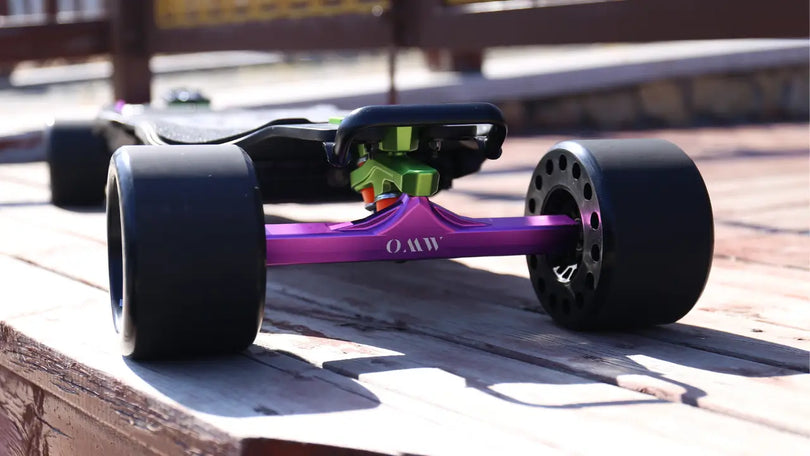
For example, a Lancer changed from street wheels to its dedicated 150mm pneumatic set has a substantial range tradeoff. That change alone does not establish a battery fault. Compare the current configuration with its own history. The OMW range-planning guide covers route distance, reserve and documented test conditions.
2. Measure pneumatic tire pressure before riding
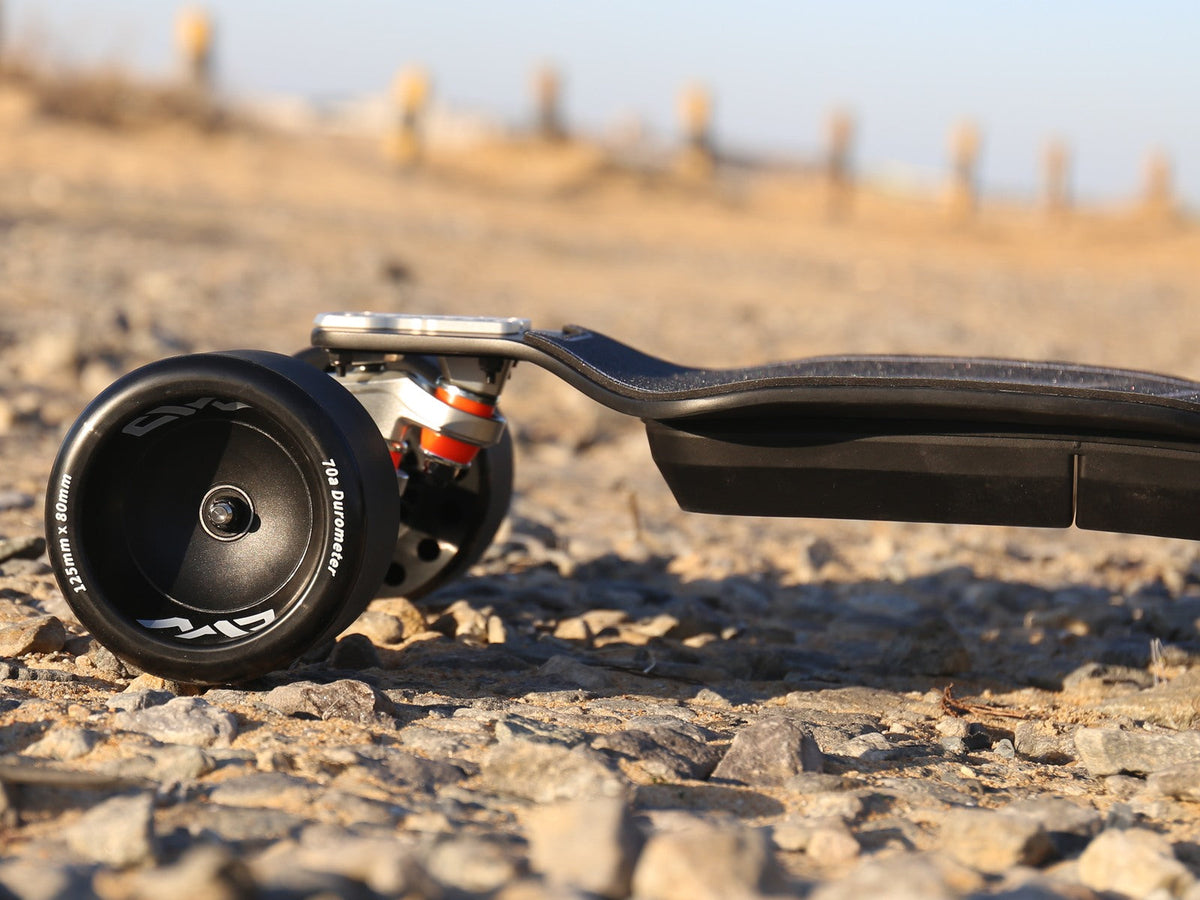
If your board has pneumatic tires, check all four with a suitable gauge while the tires are cold, before the ride. Do not judge pressure by squeezing the tire.
| Tire fitted | OMW starting pressure | Stock example |
|---|---|---|
| 150mm OMW pneumatic | 30 PSI | Hussar |
| 175mm OMW pneumatic | 36 PSI | Cavalry |
Use the tire actually fitted, rather than the board name, to select the starting point. These figures do not apply to another manufacturer's tire. MAD street wheels do not need inflation.
Low pressure increases tire deformation and rolling resistance. Record the readings before correcting them. If one tire repeatedly loses pressure, has a cut or bulge, or sits unevenly on the hub, stop riding and have the cause checked. Repeatedly topping it up does not resolve a leak. See the OMW tire pressure, wear and replacement guide for the inspection routine.
3. Look for rubbing and abnormal drivetrain resistance
Switch off the board and remote and disconnect the charger before inspection. Keep hands clear of belt and pulley pinch points. Do not touch a powered, moving drivetrain.
With the board securely supported, gently turn each wheel by hand and look for trapped debris, rubbing against the deck or guard, visible belt damage or a new scraping sound. Belt-driven rear wheels naturally resist rotation more than unpowered front wheels; equal spin time is not a pass/fail test.
Pay particular attention if the problem began after a wheel change, belt replacement or adjustment. Incorrect tension, alignment or clearance may need correction. Do not loosen axle hardware or keep tightening a belt simply to make a wheel spin differently. The OMW belt inspection and size guide explains damage signs and matched setups.
If a wheel binds, a belt skips or drive or braking feels different, stop using the board until it has been checked. A replacement battery will not correct a mechanical problem.
4. Separate a range concern from a battery diagnosis
If the external checks are normal, no warning symptoms are present and a clear change in conditions explains the difference, plan a shorter familiar ride with ample reserve. Record the starting charge indication, distance and ending indication. Do not deliberately ride until shutdown or repeatedly drain the battery to prove its capacity.
If the shorter range remains unexplained, or normal charging no longer completes as expected, contact OMW before buying parts. A remote's remaining-charge display alone cannot identify a failed cell, measure usable capacity or confirm that the battery needs replacing. Leave battery enclosure opening, electrical measurements and pack repairs to the appropriate service process.
Use only the charger supplied or recommended for your board and follow its charging instructions. Stay present while charging. The CPSC micromobility safety guidance also advises manufacturer-approved chargers and batteries.
Range troubleshooting questions

Should I replace the battery as soon as range drops?
No. First compare conditions, check pneumatic tire pressure and inspect for abnormal drag. Persistent unexplained change needs diagnosis; it is not enough evidence to order a battery.
Is reduced range after changing wheels a fault?
Not necessarily. Wheel construction and the matched drivetrain affect efficiency. Record the old and new setups and compare like-for-like rides. Noise, rubbing, skipping or braking changes still require inspection.
Should I test the board until it runs out?
No. Use short, familiar routes with reserve only after checks show no warning symptoms. Unexpected shutdowns are a reason to stop and seek support, not repeat the test.
Send OMW a useful range-check record
Email OMW support about your range change with your order email or order number, board model and identification code, wheel setup, approximate mileage, and when the change began. Add:
- Your usual distance versus the recent distance, with starting and ending charge indications.
- Rider and carried load, route, pace, weather and recent wheel or belt work.
- Cold tire readings, clear wheel and drivetrain photos, and any charging or power symptoms.
Use photos or recordings taken while safely stopped. A clear record helps the team distinguish changed riding conditions, a mechanical issue and a battery concern, then advise the appropriate next step.