



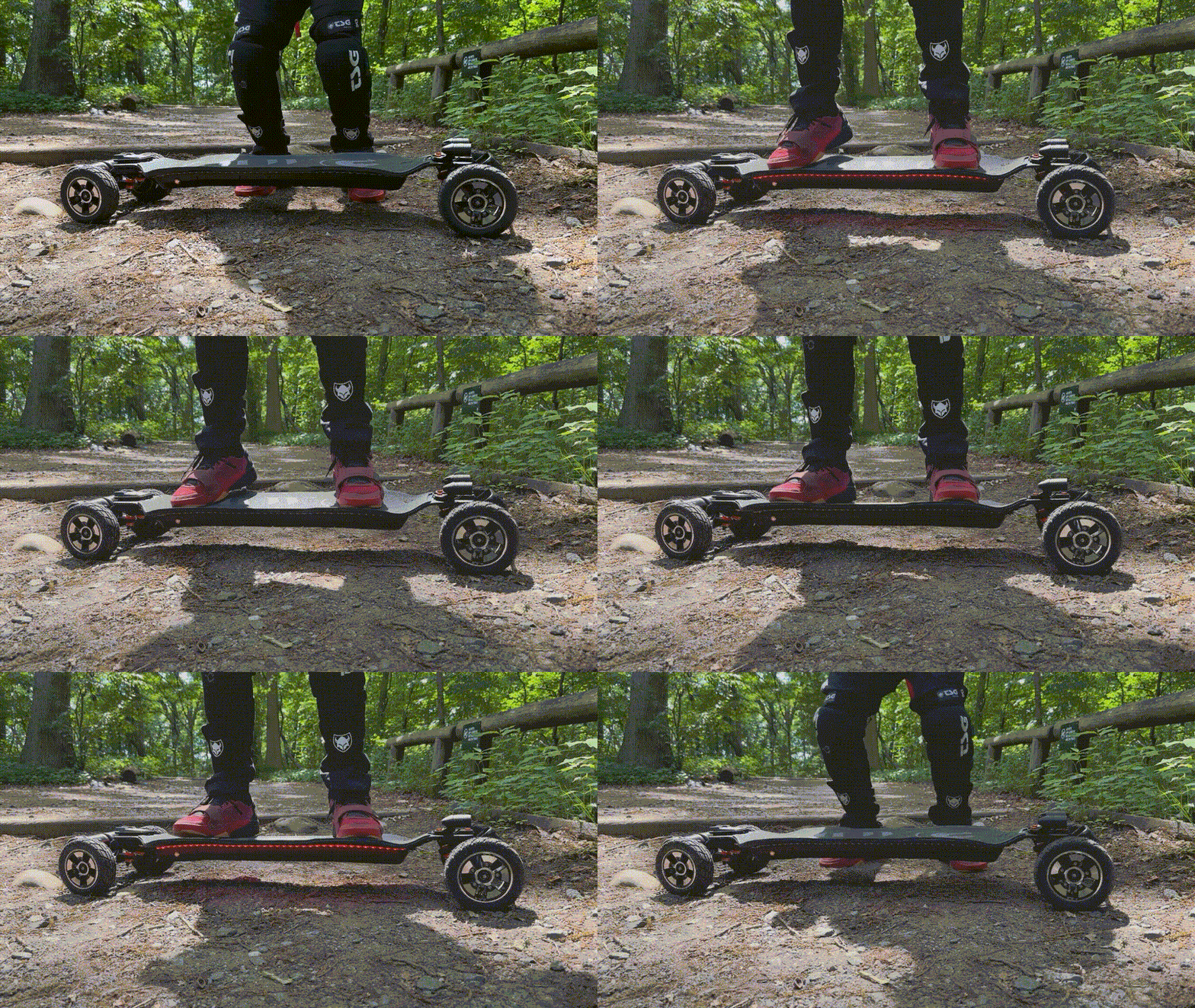

As back‑to‑school season rolls around, the same question comes up again: how do you get from your dorm to lectures, the library, or the dining hall quickly without showing up sweaty and exhausted?
On big campuses, a single walk between buildings can easily take 15–30 minutes. Bikes and scooters help, but they introduce their own problems: theft risk when you lock them outside, bulky frames that don’t fit in classrooms, and awkward storage in small dorm rooms.
Electric skateboards solve a lot of those pain points. They’re fast, compact, easy to carry indoors, and convenient enough for everyday trips between classes.
Whether you’re crossing a huge university, climbing steep campus hills, or rolling over rough sidewalks and brick plazas, this 2026 college electric skateboard guide will help you pick a board that actually fits your campus lifestyle.

1. What Makes a Good Electric Skateboard for Campus?
Campus commuting is very different from cruising open city streets. The best electric skateboard for college students has to fit your daily routine, not just look good on a spec sheet.
Dorm-Friendly Storage
Most college dorms are tight on space, and your board will end up living wherever you can squeeze it. Look for something that can slide:
- Under a desk
- Beside a dorm bed
- Into a closet corner
- Against a classroom wall
After a week of classes, you’ll be glad your board quietly sits out of the way instead of blocking the door or eating up precious floor space.
Easy Carrying Between Classes
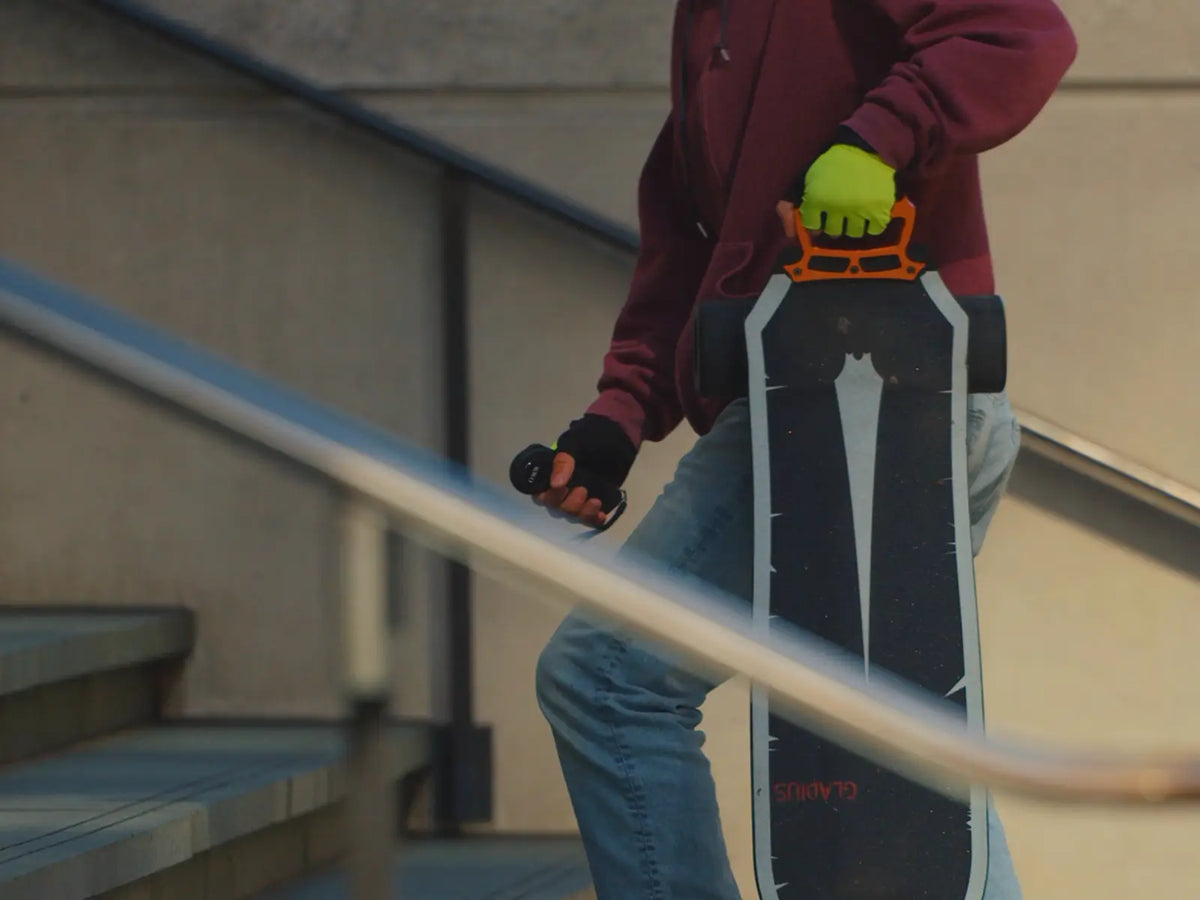
Your board doesn’t just live on the ground; you’ll carry it in and out of buildings all day. Unlike scooters, electric skateboards are designed to be grabbed quickly when you enter:
- Lecture halls
- Libraries
- Cafeterias
- Student buildings
If you can pick the board up with one hand and move on, you won’t think twice about bringing it inside. If it feels like wrestling a piece of gym equipment every time, you’ll start leaving it behind.
Smooth Riding Over Campus Roads
Most campuses mix surface types:
- Brick walkways
- Cracked asphalt
- Sidewalk seams
- Uneven pavement
On these routes, a stiff setup with small wheels feels fine for the first minute and then turns every crack into a little punishment. Larger wheels and a bit of deck flex do a much better job of smoothing out vibrations so you arrive at class without your feet buzzing.
Enough Power for Campus Hills
Many universities are built on or around hills. A good campus electric skateboard should have:
- Strong dual motors
- Reliable battery performance
- Enough torque for everyday uphill riding
When you’re late for class, the last thing you want is a board that slows to a crawl halfway up the main hill. Consistent climbing power makes your commute feel like a shortcut, not another chore.

2. Electric Skateboard vs Electric Scooter for College
|
Feature |
Electric Skateboard |
Electric Scooter |
|
Storage |
Easy to store under desks or beside beds |
Larger footprint and harder to store |
|
Indoor Convenience |
Easy to carry inside classrooms |
Folding scooters can still be bulky |
|
Portability |
Grab the handle or trucks and carry |
Heavy stem and frame |
|
Riding Style |
More engaging and flexible |
More similar to traditional transportation |
|
Campus Mobility |
Excellent for weaving through walkways |
Less agile in crowded areas |
For many college students, electric skateboards offer a better balance between speed, portability, and storage convenience.
3. What Specs Matter Most for a College Electric Skateboard?
Before you buy a board for campus commuting, it helps to match the specs to your actual daily routine instead of chasing the biggest numbers.
Range
Your real commute decides how much battery you need:
- Small campus: 8–12 miles of honest range is usually enough for back-and-forth trips.
- Large campus or multiple daily rides: 15+ miles is safer so you’re not watching the battery bar all day.
If your board comfortably covers a full day of classes, you won’t have to carry a charger in your backpack “just in case”.
Weight
You’ll pick your board up more often than you think:
- Lighter boards are easier to live with in dorms and stairwells.
- Heavier boards usually feel more planted and carry more power.
The sweet spot depends on your campus. Flat, compact schools reward lighter setups; big, hilly campuses make the extra weight of a more powerful board feel worth it.
Wheel Size
Wheel size has a huge impact on comfort:
-
90–105 mm street wheels
- Easy to carry and store
- Great for sidewalks and bike paths
- More agile when weaving around pedestrians
-
Large pneumatic tires
- Much better shock absorption
- More grip on rough or loose surfaces
- Ideal for hills, gravel shortcuts, and mixed terrain
Think about your campus surface first, then choose wheels to match it.
Deck Flex
Deck flex is your hidden comfort feature. A deck with some flex:
- Smooths out small bumps and vibrations
- Reduces foot fatigue on longer rides across campus
If you know you’ll be riding several kilometers between buildings every day, a flex deck can make the difference between “fun transport” and “tiring chore”.
4. Best Electric Skateboard Types for Campus Life
Compact Shortboards - Best for Portability
Campus fit: Excellent
Compact boards are ideal for students who care most about:
- Lightweight carrying up stairs
- Tight turning through crowded walkways
- Easy dorm and classroom storage
Best for:
- Short trips between dorms and classrooms
- Dense urban campuses
- Students who pick up and carry their board often
Example: OMW Gladius – a compact deck with premium components that stays easy to carry while still feeling powerful and stable.

Flex Deck Street Boards - Best for Daily Comfort
Campus fit: Great
Flex deck boards are built for longer rides where comfort matters:
- Better vibration absorption
- More forgiving over rough sidewalks and brick plazas
- Stable cruising at moderate speeds
Best for:
- Large university campuses
- Daily 3–8 km commutes
- Students who ride multiple times per day
Example: OMW Lancer – a flexible carbon deck with long-range street setup, ideal for students who cross big campuses and want a smoother ride.

All-Terrain Boards - Best for Hills and Rough Roads
Campus fit: Excellent for challenging terrain
All-terrain boards shine on:
- Steep hills and long ramps
- Grass shortcuts and park paths
- Gravel, cracked asphalt, and uneven roads
Trade-off: They’re heavier and less convenient to carry for long distances indoors.
Best for:
- Hilly campuses
- Outdoor-focused students
- Riders who want maximum versatility beyond sidewalks
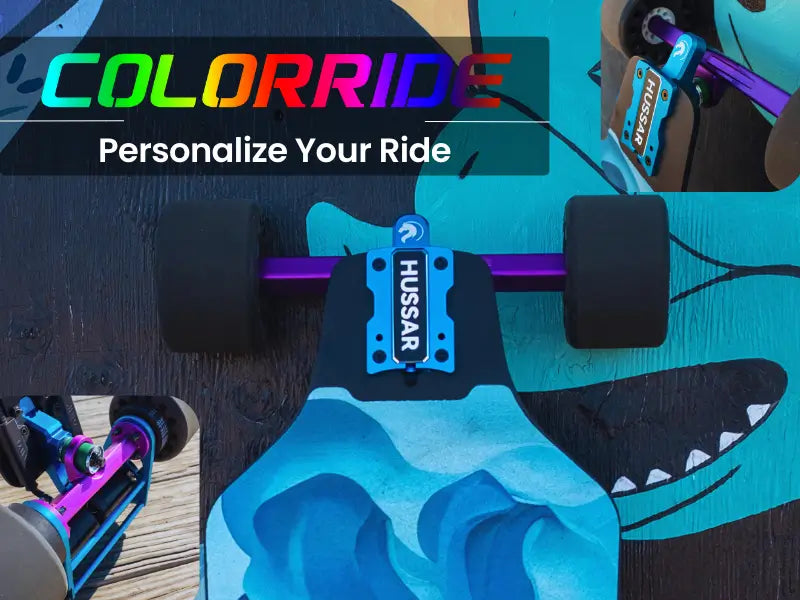
Example: OMW Hussar - strong climbing performance and all-terrain capability for students whose routes include more than just smooth pavement.

5. Real Campus Commute Example: The 10 Minute Class Challenge
Imagine this typical morning:
- Route: Dorm → Chemistry Lab
- Distance: 2.2 km
-
Terrain:
- 500 m brick plaza
- 1 km asphalt pathway
- 700 m uphill section
With an Electric Scooter
You may enjoy a comfortable ride, but once you arrive you still have to:
- Find a place to park it
- Worry about theft in busy areas
- Deal with a larger vehicle at classroom doors
- With a Flex Deck Electric Skateboard
You can:
- Smooth out rough surfaces and seams
- Handle moderate hills without the board bogging down
- Carry it indoors in a few seconds
- Slide it beside or under your seat without blocking the aisle
For everyday campus life, portability matters just as much as raw speed.
6. Best OMW Electric Skateboards for College Students (Quick Summary)
If you want specific board names to match these campus scenarios:
- OMW Gladius - best compact campus board for dorm living, short routes, and frequent carrying.
- OMW Lancer - best long-range commuter for large campuses and students who value comfort on longer rides.
- OMW Hussar - best all-terrain choice for hills, rough roads, and mixed terrain routes.
7. Campus Electric Skateboard Safety Tips
Respect Pedestrians
Campus walkways are shared spaces, not race tracks. Slow down to walking speed whenever you approach:
- Crowded plazas
- Dining areas and coffee lines
- Classroom entrances and building doors
If you treat pedestrians as unpredictable obstacles, you’ll naturally leave more margin for sudden direction changes or people stepping out while looking at their phones.
Improve Visibility
Many college rides happen early in the morning or after sunset. To stay visible and avoid surprises:
- Use a forward headlight to spot cracks, curbs, and uneven pavement.
- Add a rear light so campus security and cyclists can see you from behind.
- Consider a small reflective patch on your backpack or jacket for extra visibility.
Being seen half a second earlier can be the difference between a casual brake and a panic stop.
Wear Protection
Even experienced riders occasionally clip a curb or dodge a distracted pedestrian at the wrong moment. Basic protection makes those mistakes far less serious:
- Always wear a helmet.
- Use wrist guards if you ride regularly.
- Wear closed-toe shoes with good grip.
Most campus accidents don’t happen during high-speed carving; they happen when you’re tired, late for class, or reacting to something unexpected. Protecting your head and wrists is a small effort compared with missing a week of lectures due to an avoidable injury.
Frequently Asked Questions
Q: Are electric skateboards good for college students?
Yes. Electric skateboards are especially useful for college students because they are fast, portable, and easier to store than many other personal transportation options.
Q: What is the best electric skateboard for a college campus?
The best choice depends on your campus:
Small campus → Compact shortboard like OMW Gladius
Large campus → Long-range commuter like OMW Lancer
Hills and rough roads → All-terrain board like OMW Hussar
Q: Can I bring an electric skateboard into my dorm?
Most compact and medium-sized electric skateboards can easily fit in dorm rooms. Always check your university’s transportation and storage rules.
Q: Are electric skateboards allowed on all campus paths?
Not always. Some universities restrict personal electric vehicles in certain areas (such as inside buildings, on main plazas, or along narrow walkways) or set speed limits. Check your school’s PEV or micro‑mobility policy and follow posted signs. Riding respectfully makes it much less likely that new rules will be introduced to restrict boards.
Q: Can beginners safely use electric skateboards on campus?
Yes, but beginners should start slow and practice in empty areas before riding near pedestrians. Use beginner or low‑power modes, learn braking at different speeds, and always wear a helmet and proper shoes. Treat the first few weeks as training, not as a race between classes.
Final Buying Guide: Choose the Right Campus Electric Skateboard
Before the semester starts, match your board to the way you actually move around campus:
Need maximum portability and tight dorm space?
→ Choose a compact shortboard you can grab with one hand and tuck under a desk.
Have long daily rides across a large campus?
→ Choose a flex deck commuter board that smooths out rough sidewalks and stays comfortable for 3–8 km routes.
Ride hills, rough roads, or grass shortcuts?
→ Choose an all-terrain board with bigger tires and stronger torque for challenging terrain.
Pick the setup that fits your campus, and your ride to class stops being the most tiring part of the day. With the right electric skateboard, getting to lectures, labs, and late-night study sessions can become the part of college you actually look forward to.