




Electric skateboards rely on powerful lithium batteries, so the way these batteries are housed is critical. A well-designed battery enclosure keeps the pack safe from physical impacts, vibrations, and environmental exposure, but it also affects how the e-board feels to ride. A well-designed enclosure acts as an armored shell, protecting these delicate electronics from high-frequency vibrations and sudden shocks that occur during aggressive riding.
In this guide, we will explore how engineering choices in battery enclosure design, ranging from material selection to flex compatibility, directly impact your electric skateboarding experience.
Material Selection: Balancing Strength, Weight, and Signal Performance
Material choice is the foundation of battery enclosure design, influencing impact protection, heat dissipation, weight, and wireless signal performance. In electric skateboards, the most common materials are aluminum alloys, engineering plastics, and carbon fiber composites, each with distinct trade-offs.
- Aluminum Alloys
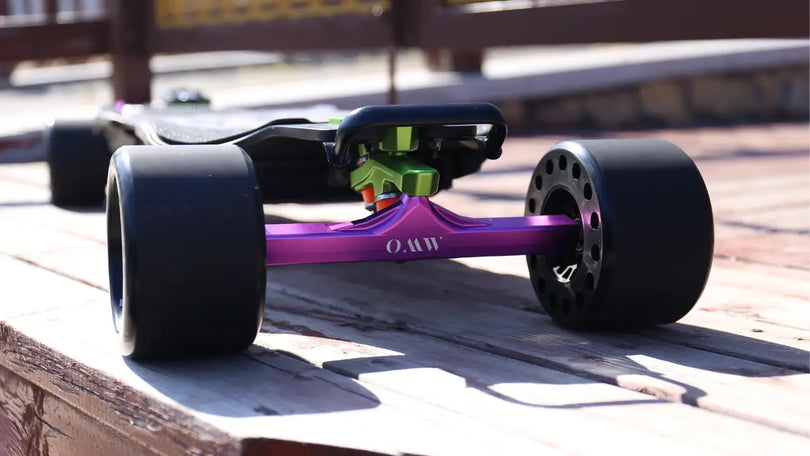
Aluminum is widely used in electric vehicle battery enclosures due to its excellent balance of strength and heat dissipation. In the esk8 world, brands like OMW Boards use rigid armored alloy enclosures because they offer superior impact resistance and act as a natural heatsink.
However, aluminum can dent under extreme force and, due to its conductivity, may interfere with Bluetooth or remote signals if antenna placement is not optimized.
- Polycarbonate (PC) and ABS Plastics
Polycarbonate and ABS are common on entry-level and mid-range boards. They are lightweight, cost-effective, and highly impact-resistant. Another advantage is that plastics are radio-transparent, allowing wireless signals to pass through without interference.
However, plastics trap heat more easily than metal, making thermal management more challenging during high-power or long-duration riding.
- Carbon Fiber
Carbon fiber offers an exceptional strength-to-weight ratio and a premium appearance. Its high rigidity provides strong protection but transfers more road vibration to the rider, which can reduce comfort without adequate deck flex or damping.
Ride Comfort: The Balance Between Rigidity and Flex
One of the biggest challenges in electric skateboard design is balancing battery protection with deck flex. While rigid battery packs improve durability, too much stiffness can compromise ride comfort and place additional stress on internal wiring.
Integrated vs. External Enclosures
- Integrated Enclosures
Integrated enclosures are built directly into the deck, creating a clean profile and offering strong protection from water and debris. However, their rigid construction often limits a deck’s natural flex—an essential feature for absorbing road shocks. Over time, this restriction can increase vibration transfer to the rider and strain internal electrical connections.
- External or Segmented Enclosures
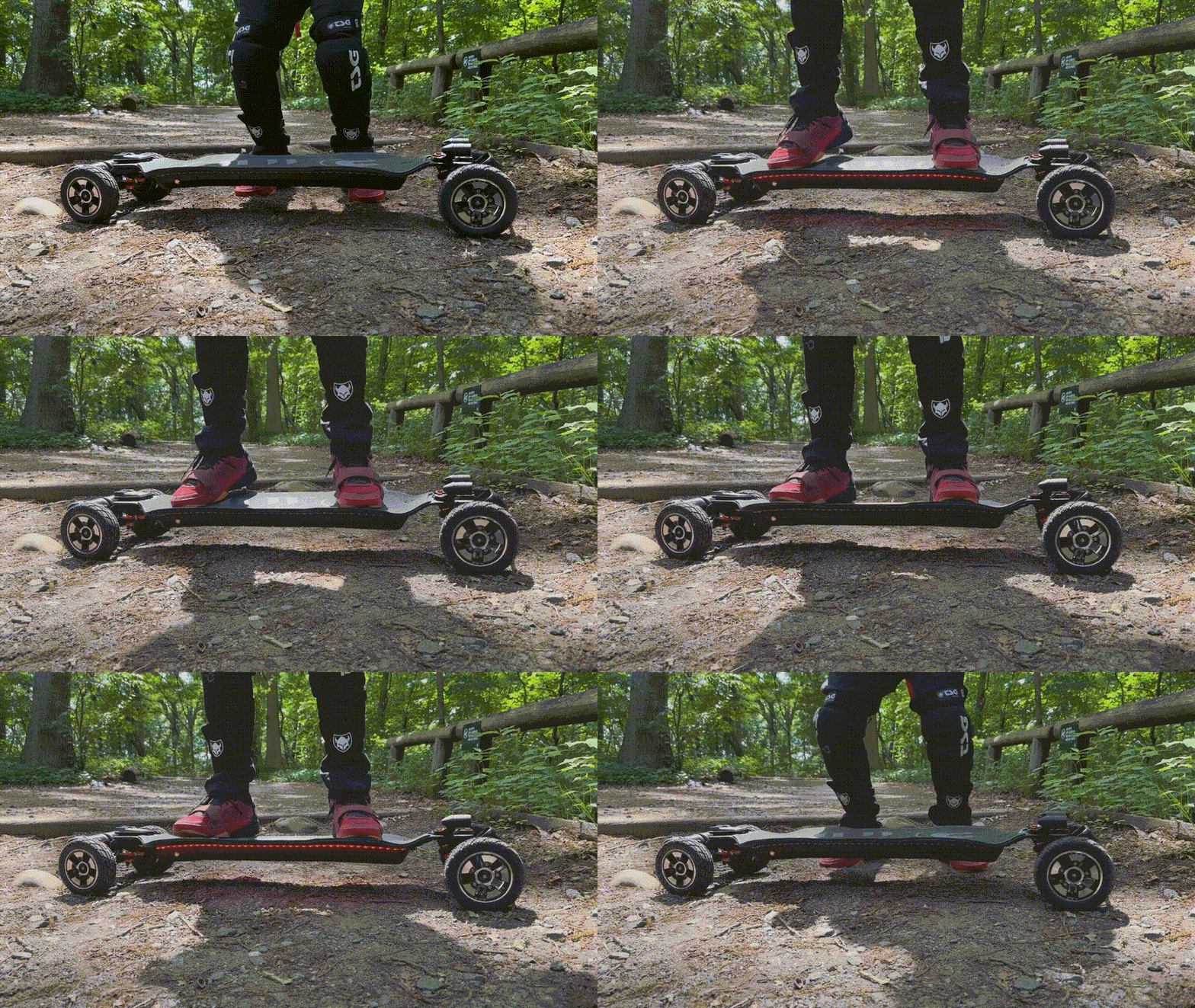
External or segmented enclosures allow the deck to flex more naturally, preserving ride comfort. Instead of resisting movement, these designs move with the deck, reducing stress on wiring and electronics.
Some performance-focused boards adopt segmented enclosure structures that flex in sections rather than as a single rigid unit. This approach, seen in designs like OMW Boards’s Chain Whip battery system, helps maintain secure electrical connections while significantly reducing road vibration felt by the rider.

Thermal Management and Battery Longevity
Batteries generate heat during acceleration, hill climbs, and fast charging. Without proper thermal management, excess heat can shorten battery lifespan or trigger protective power limits.
Enclosure design plays a key role in heat dissipation:
- Metal enclosures conduct heat more efficiently than plastics
- Larger surface areas help transfer heat to the ambient air
- Internal spacing and thermal pads reduce localized heat buildup
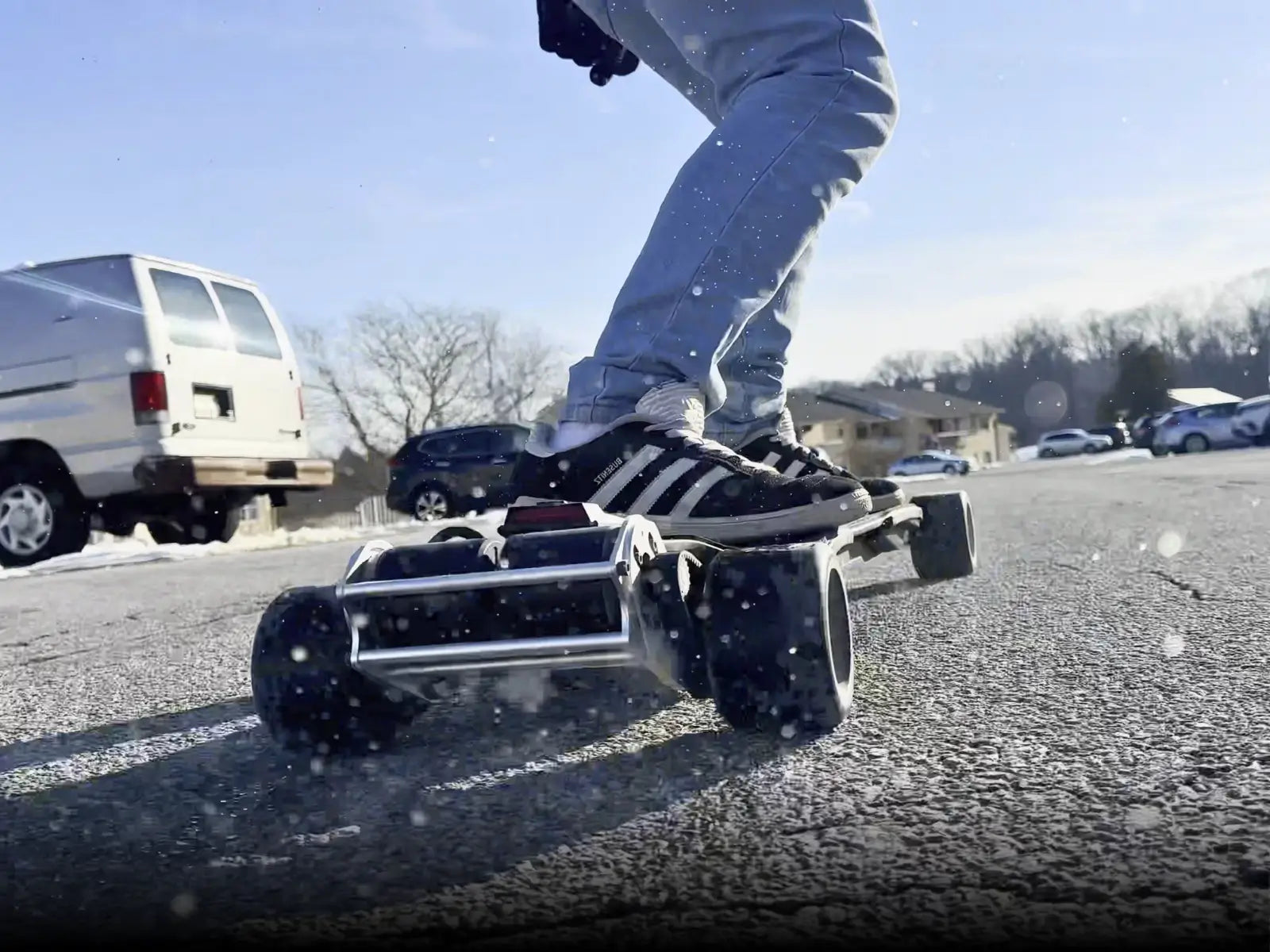
On durability-focused boards like OMW Cavalry, the battery enclosure is designed with high structural rigidity to resist strong external impacts while maintaining internal stability. The enclosed, reinforced compartment minimizes vibration-induced stress on electrical connections, improving long-term reliability. In addition, the combination of a metal enclosure and flame-retardant end caps provides an added safety layer, helping momentarily suppress combustion by limiting oxygen exposure in the rare event of battery failure.
Together, these design choices highlight how a well-engineered battery enclosure not only manages heat effectively, but also enhances safety, structural integrity, and battery longevity over time.

Water and Dust Resistance
Water is one of the biggest threats to electric skateboard reliability. Even light rain, road spray, or shallow puddles can cause corrosion or electrical failure if moisture reaches the battery.
Battery enclosures provide the first line of defense, typically through:
- Rubber gaskets around enclosure lids
- Sealed cable exits and ports
- Tight tolerances between enclosure panels
Most electric skateboards are designed to be water-resistant, not fully waterproof. IP ratings such as IP54 or IP55 are common and offer protection against dust and splashes, but they are not intended for full submersion.
Weight Distribution and Stability
Battery placement affects both stability and ride comfort. Low-mounted, belly-style enclosures beneath the deck lower the center of gravity, making the board feel planted and predictable. Top-mounted boxes, by contrast, can feel twitchy and less stable.
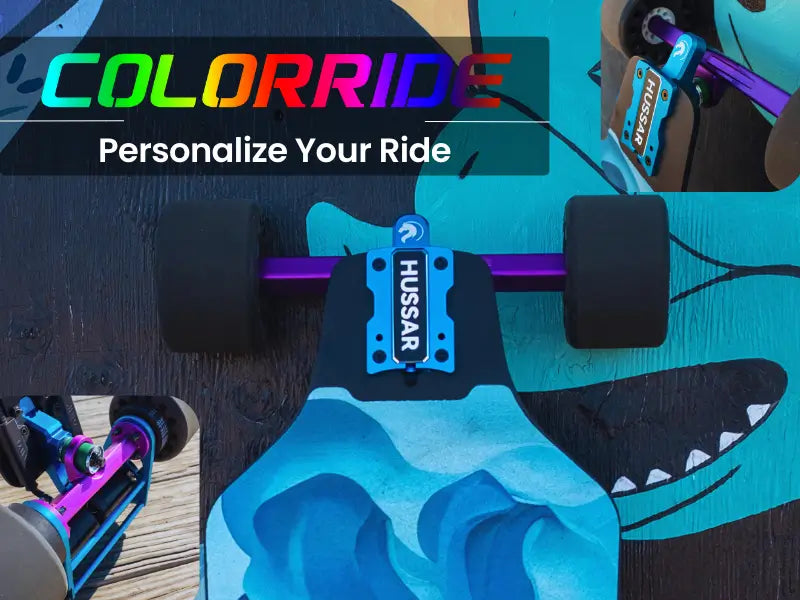
Most E-boards use midboard enclosures to keep weight centered along the board’s neutral axis. Performance-focused designs, like OMW Cavalry and Hussar, follow this principle, keeping heavy battery packs close to the deck for better balance and reduced wobble.
A well-positioned enclosure ensures a low, balanced weight distribution, contributing to a smoother, more controlled ride.
Conclusion
Battery enclosure design plays a major role in how an electric skateboard feels and performs in real-world riding. It affects safety, heat management, comfort, and stability—often more than riders expect.
When choosing a board, it’s worth looking beyond speed and range. Pay attention to enclosure material, sealing quality, deck flex compatibility, and battery placement. A well-designed enclosure protects the battery, manages heat effectively, and keeps weight low and centered, resulting in a smoother, more stable ride.