




Intro
The best electric skateboard for commuting balances range, comfort, braking stability, and portability. If you ride in traffic every day, the right board should feel predictable, smooth, and easy to carry.
For most urban riders, the ideal commuter board should offer 15–25 miles of real-world range, stable braking, manageable weight, and good vibration dampening on rough pavement.

What Matters Most in a Commuter Electric Skateboard?
The best commuter boards usually stand out in three areas: stability, comfort, and durability. These factors matter more for daily commuting than raw top speed or peak motor power because commuting is about control, consistency, and long-term reliability.
Stability: Predictable Control in Traffic
A great commuter board should feel stable at low speeds, in stop-and-go traffic, and when you need to brake quickly. For daily riding, predictable control matters more than top speed because it helps you stay confident on busy streets and uneven pavement.
Comfort: Less Fatigue on Longer Rides
Comfort matters when your commute lasts more than a few miles. A board with better ride feel, smoother acceleration, and stronger vibration dampening can reduce foot fatigue and make everyday riding much easier.
Durability: Reliable After Hundreds of Miles
Durability is important because a commuter board needs to handle repeated use, rough pavement, and changing weather conditions. The best boards stay dependable over time, so you do not have to worry about frequent maintenance or performance drops.
What a Real Commute Demands
Commuting is different from recreational riding. A board has to handle stop-and-go traffic, rough pavement, frequent carrying, and changing battery conditions without losing predictability
- 15–25 miles of real-world range
- Stable braking for stop-and-go traffic
- Manageable weight for daily carrying
- Good vibration dampening on rough pavement
Why Ride Feel and Power Architecture Matter
For commuting, power architecture matters because it affects how consistent the board feels as battery level changes. A well-designed high-voltage system can deliver smoother acceleration, more predictable braking, and less voltage sag on hills or longer rides.
In daily use, this means the board still feels smooth when you are riding to work, crossing rough roads, or finishing a longer route with less battery left.
Which OMW Board Fits Your Commute?
| Model | Best For | Why It Fits |
|---|---|---|
| OMW Lancer | Long-distance commuting | Stable cruising and better efficiency on longer rides |
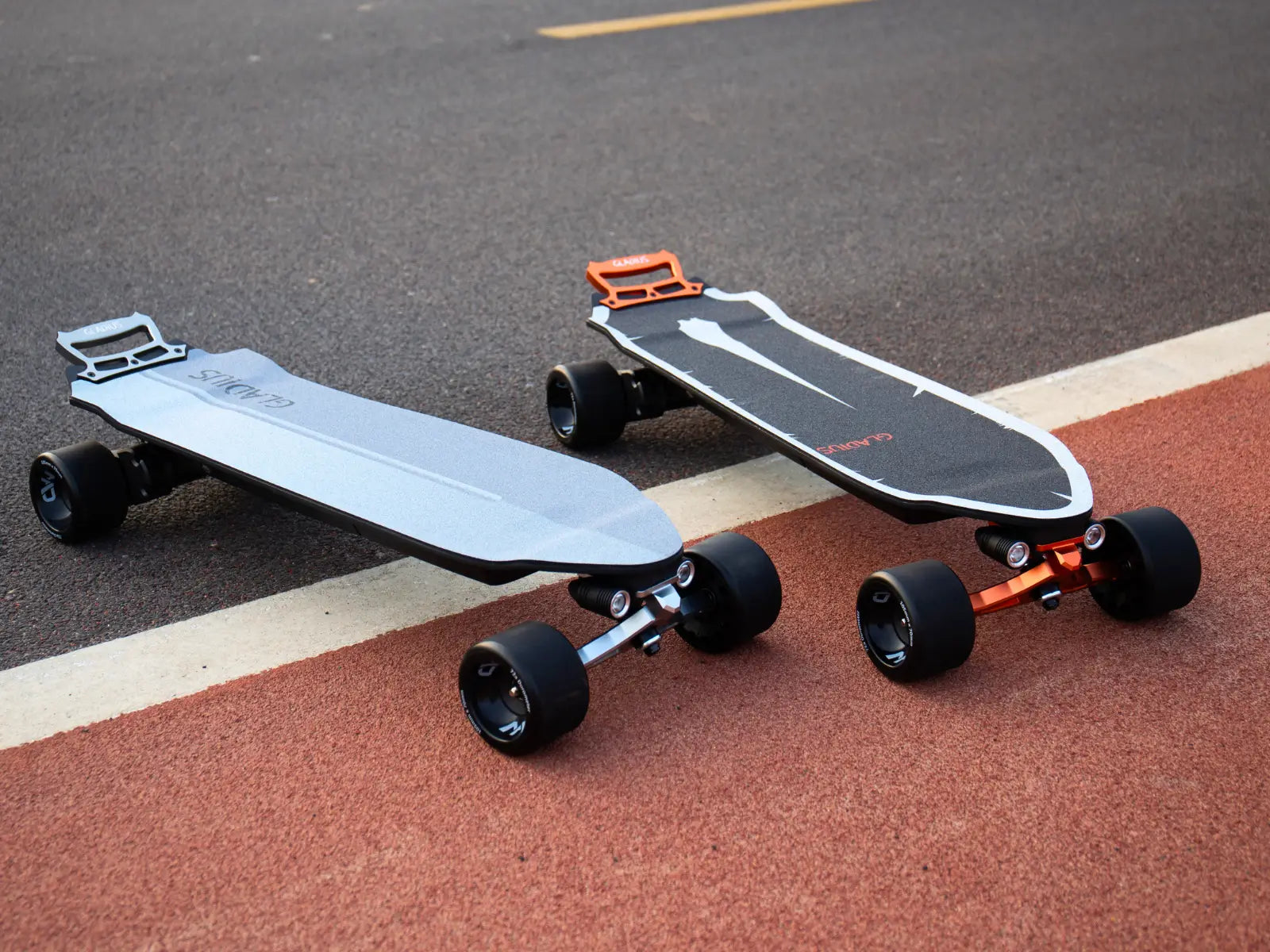
| OMW Gladius | City commuting | Balanced for daily urban use, with strong focus on comfort and control |
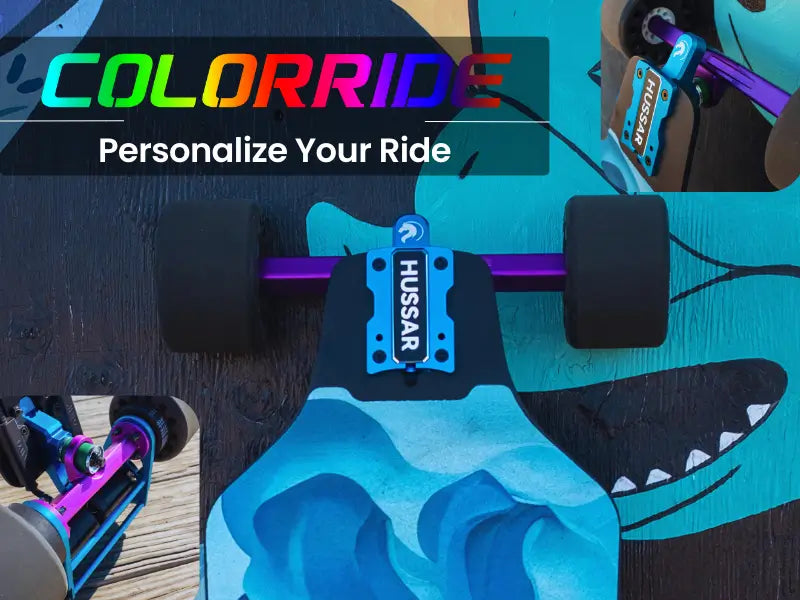
| OMW Hussar | Street riding and versatile daily use | Flexible board feel with strong everyday appeal |
| OMW Cavalry | Rough roads and mixed terrain | Better for broken pavement and uneven roads |
Real-World Commuting Scenarios
Not every commute looks the same. The best electric skateboard for daily use depends on how far you ride, what kind of roads you deal with, and whether you need to carry your board on stairs, into the office, or onto public transit.
- Portable city commute: If you travel 6–8 miles each day, OMW Gladius is a strong choice because it balances comfort, control, and portability for everyday urban riding. It is a practical option for riders who want a smooth board for stop-and-go traffic and regular city streets. 👉 See OMW Gladius Review: A Real-World Commuter Test

- Long-distance commute: If your daily ride is longer and you care about stable cruising and better efficiency, OMW Lancer is the board to highlight. It is a strong fit for riders who want a dependable long-distance setup that feels smooth and efficient over repeated daily use. 👉 See Best Electric Longboard Under $800

- Street riding and versatile use: If you want one board for both commuting and casual street riding, OMW Hussar is a flexible option with everyday appeal. It works well for riders who want a board that feels fun, practical, and adaptable across different riding situations.
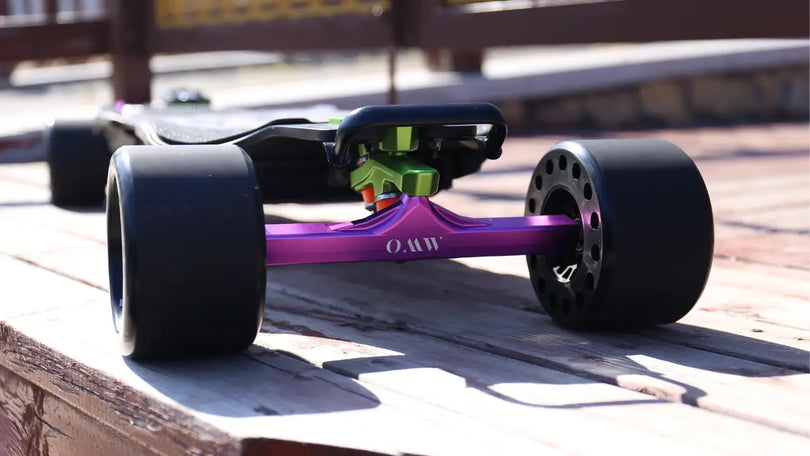
- Rough urban roads: If your commute includes cracked pavement, uneven streets, or rough intersections, OMW Cavalry is a better fit because it is built for tougher daily conditions. This makes it a good choice for riders who need more confidence and stability on less forgiving roads.
These real-world scenarios matter because commuting is not just about speed or range on paper. The right board should match your route, your riding style, and the kind of daily conditions you actually face.
Real Commuter Challenges (Beyond the Spec Sheet)
Specifications rarely capture the most important part of commuting: how the board actually feels in daily use.
At OMW, we evaluate boards using real-world commuter scenarios.
1. The “Sudden Stop” Test
City traffic often requires sudden braking.
Many budget boards use generic controllers that can feel jerky or unpredictable.
OMW boards use Hobbywing ESC systems, widely recognized for their smooth throttle and braking response. Our braking curves are custom-tuned to provide controlled deceleration, helping riders maintain balance even during abrupt stops.
2. The “Road Buzz” Reality
Morning dew, uneven pavement, and sidewalk transitions can produce high-frequency vibrations that numb riders’ feet.
To reduce this effect, OMW boards use carbon fiber composite decks with a split-enclosure design.
By separating the battery from the electronics compartment like OMW specially engineered Chain-Whip™ battery enclosure, the deck retains natural flex characteristics, helping absorb vibration that rigid single-enclosure boards cannot.
3. The “Third-Floor Factor.”
Many commuter boards perform well on the road but become inconvenient the moment the ride ends.
Daily commuters frequently deal with:
- apartment stairs
- office elevators
- crowded entryways
OMW boards emphasize balanced weight distribution and ergonomic carry design.
For example, the Gladius Kicktail-Handle allows riders to grab the board in one fluid motion, making it easier to carry up stairs or through buildings.
14S vs 12S Power Architecture: Choosing the Right System
One of the most important technical decisions in commuter board design is the battery voltage architecture.
OMW currently offers two optimized systems.
The 14S High-Voltage Series — Maximum Efficiency
Boards:
A 14S system (58.8V) allows the board to produce the same power using lower current.
This provides several advantages for commuters:
- reduced heat generation
- improved efficiency
- more stable power delivery
- less voltage sag on hills
For riders facing steep climbs or long daily commutes, 14S systems provide a noticeably smoother experience.
The 12S Performance Series — Proven Reliability
Boards:
- OMW Cavalry
- OMW Hussar
The 12S architecture remains one of the most reliable and widely adopted systems in the industry.
Combined with high-quality 21700 cells, these boards deliver excellent torque, stability, and long-term durability.
For many commuters, 12S offers the perfect balance between performance and reliability.
Electric Skateboard Commuting FAQ
Q: Is an electric skateboard good for daily commuting?
Yes. Electric skateboards can be an efficient and enjoyable commuting option for short to medium urban distances, especially when combined with bike lanes and low-traffic streets.
Q: Are electric skateboards legal for commuting?
Regulations vary by country and city. Many regions allow electric skateboards in bike lanes or shared mobility zones, but riders should always check local regulations.
Q: Can electric skateboards handle rough city pavement?
Boards with flexible decks or pneumatic tires perform much better on cracked asphalt and uneven roads.
Q: Is a high-voltage system better for commuting?
Higher-voltage systems, such as 14S setups, can improve efficiency and reduce voltage sag, especially on hills or longer rides.
Q: What Makes an Electric Skateboard Energy Efficient?
Energy efficiency is not just about battery size. It also depends on riding speed consistency, voltage architecture, wheel setup, and how much power the board needs to maintain cruising speed. For daily commuting, a board that holds speed smoothly and avoids frequent acceleration spikes will usually feel more efficient in real use.

Final Thoughts:
The best electric skateboard for commuting is not the fastest or most powerful model. It is the one that gives you stable control, comfortable daily riding, reliable braking, and enough portability to fit real-life commuting.
For riders comparing OMW boards, the best choice depends on commute distance, road quality, and how much comfort you want on every ride.
First time riding? Check out our [2026 Beginner's Guide] to learn how to build confidence safely.