


The best electric skateboard for a beginner is not the board with the highest top speed. It is the board that fits the rider’s real route, offers a manageable stance, responds predictably to gentle remote input and can be practiced at low speed.
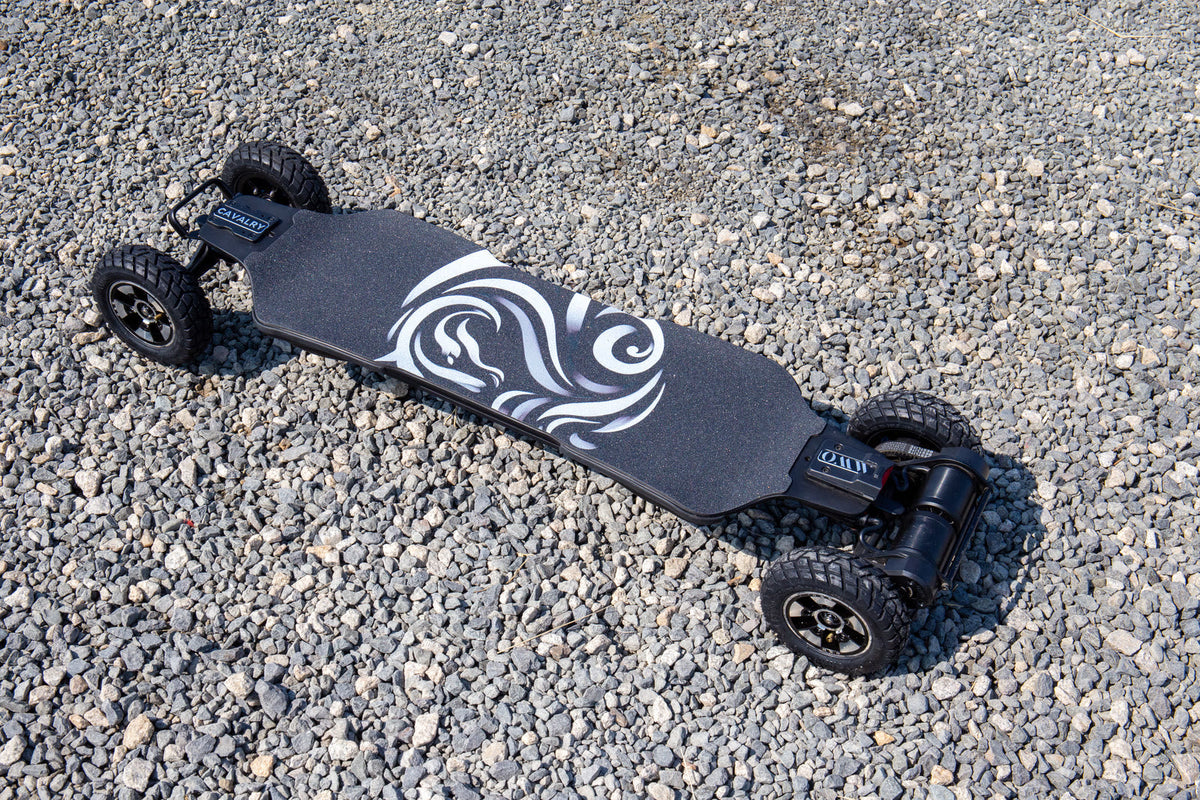
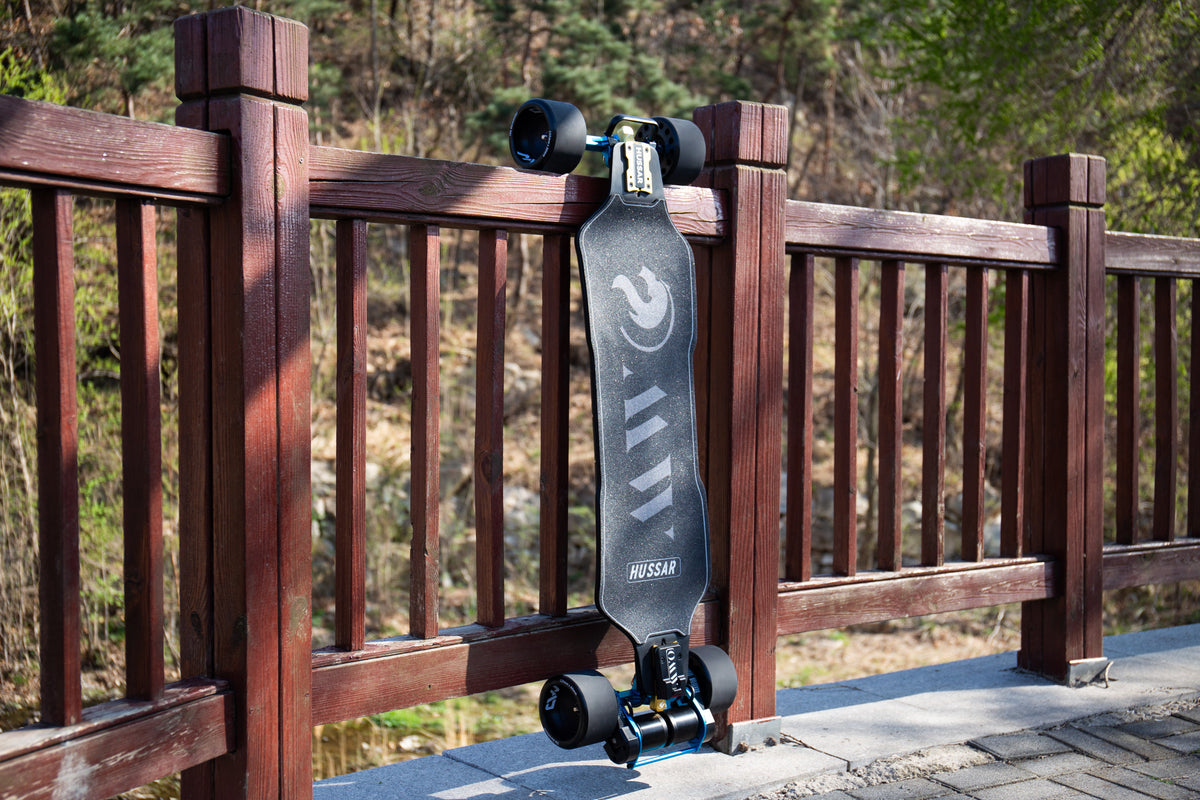
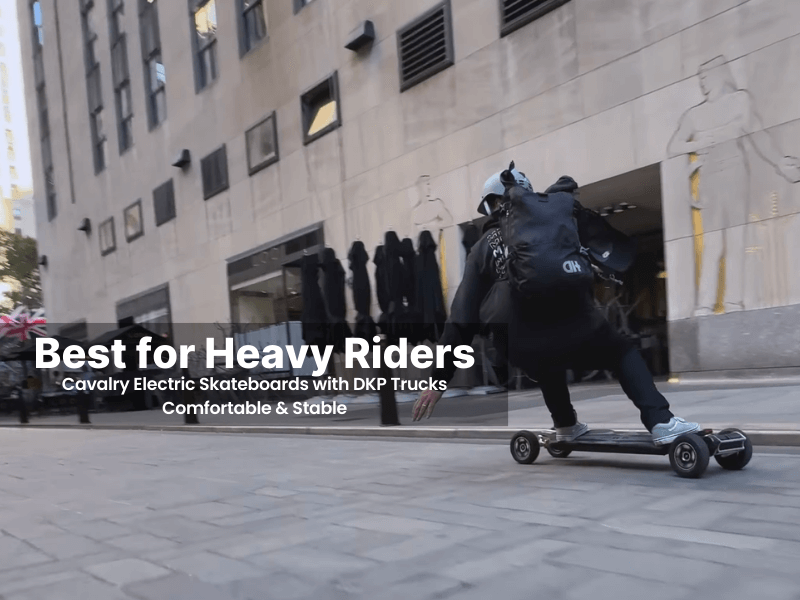
For most new riders comparing OMW boards, start with Gladius when portability matters most or Lancer when a longer, more planted street platform matters more. Hussar becomes a stronger option when comfort-led flex and larger-wheel versatility are priorities. Cavalry makes more sense when rough roads and range reserve justify a heavier board.
No electric skateboard is automatically safe for a beginner. The rider still needs a dry practice area, conservative settings, protective equipment and enough time to learn smooth braking before entering traffic or attempting hills.
Quick answer: which OMW board should a beginner consider?
| OMW board | Best beginner use case | Think carefully about |
|---|---|---|
| Gladius | Compact storage and riding-to-carrying transitions on paved routes | The compact deck does not make the complete board lightweight; check whether you can carry the selected setup |
| Lancer | Paved routes and riders who want a longer, planted street platform | A longer deck needs more storage space; check the complete-board weight and your carrying routine |
| Hussar | Comfort-led street riding, carving and mixed pavement | More deck movement and a larger complete setup require deliberate low-speed practice |
| Cavalry | Rough roads, hills and longer routes that need more reserve | More board weight and capability than many first-time riders need |
The OMW five-model buying guide provides the broader comparison, including Super Cavalry for experienced performance riders.
What actually makes an electric skateboard beginner-friendly?
1. Manageable control at low speed
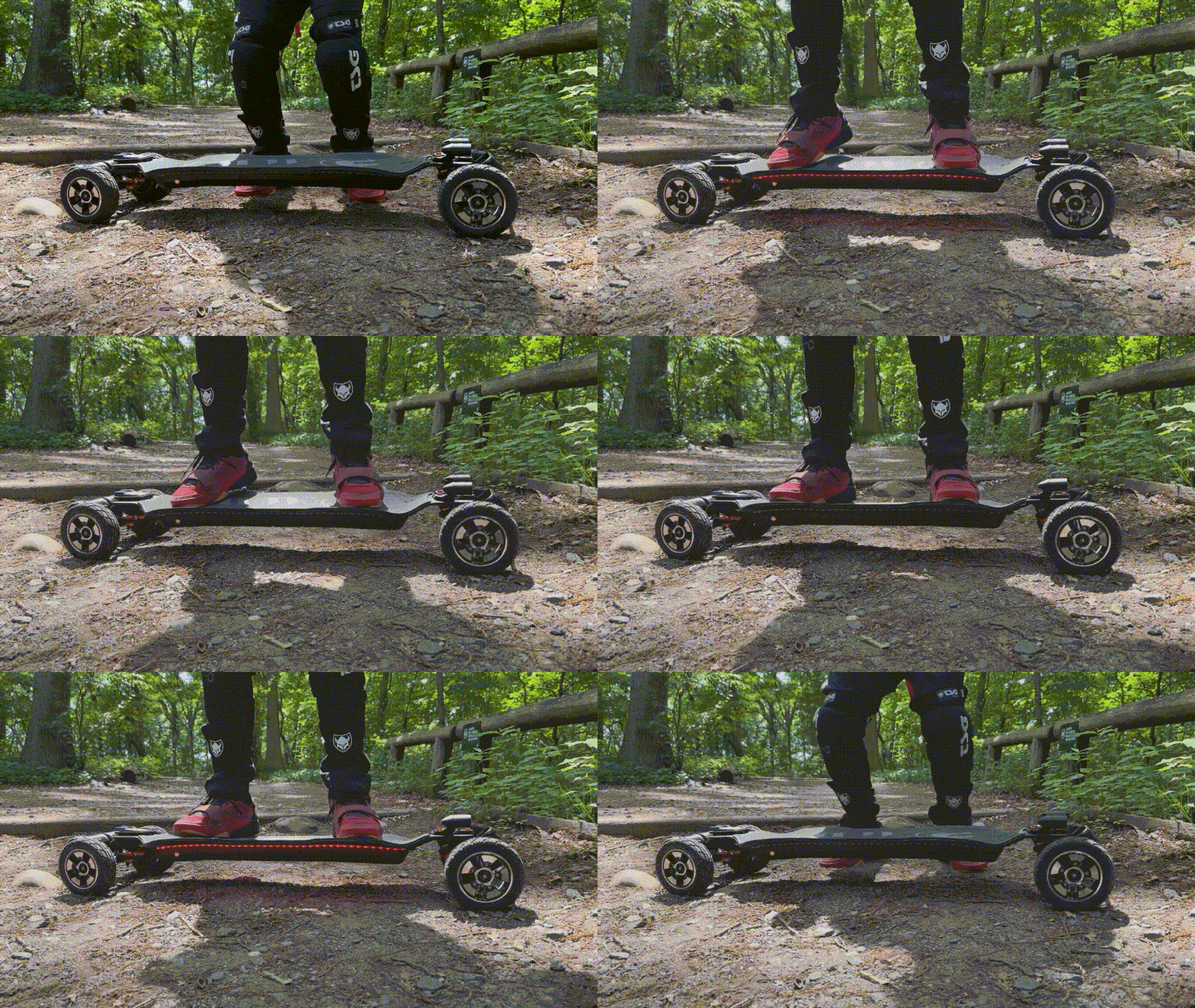
A new rider needs to make small corrections without feeling rushed. The board and remote should allow gentle starts, gradual slowing and repeatable low-speed practice. Use the lowest suitable riding mode and learn how the remote responds before increasing speed.
Do not treat a beginner mode as a substitute for skill. Even conservative settings can produce a strong weight shift if the rider applies the throttle or brake abruptly.
2. Enough standing room for a relaxed stance
Compare the actual deck size, not just the word “longboard.” Gladius has a 33.5 × 9.8 in (850 × 250 mm) deck; Lancer has a 39.3 × 10.2 in (1000 × 260 mm) deck. Lancer gives more deck length for placing your feet, while Gladius takes less length to store. These are deck measurements, not complete-board dimensions, and neither size guarantees stability.
A compact board can still be the better daily choice when the rider must carry it through stations, offices or stairs. Stability while riding and convenience while carrying are different decisions.
3. Wheels that match the real surface
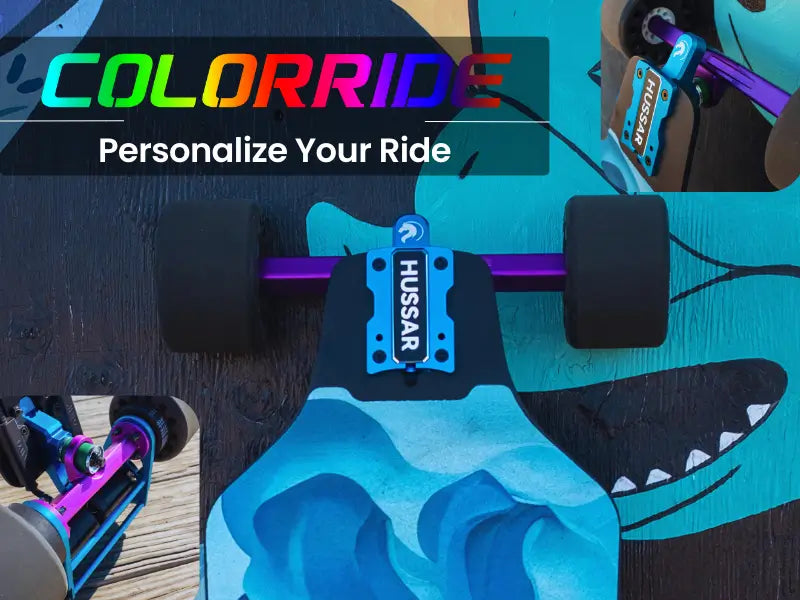
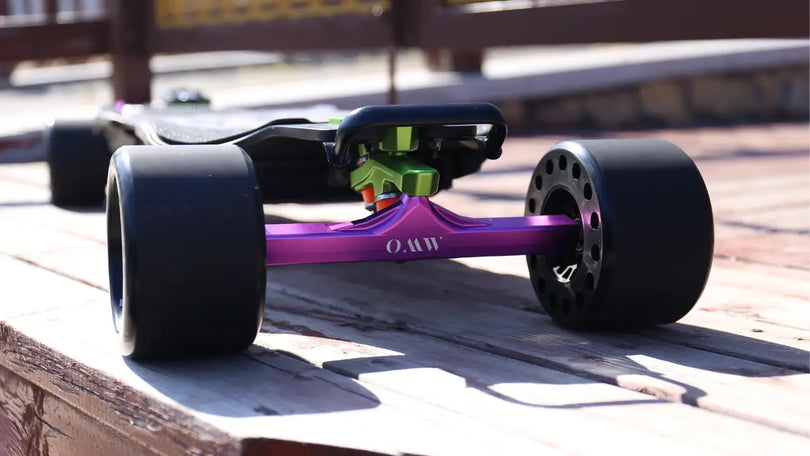
Smaller street wheels feel direct and efficient on smooth pavement. Larger wheels can improve comfort and roll-over ability on cracks and rougher surfaces, but they do not remove the need to slow down before debris, uneven joints or loose material.
Choose for the route you will actually ride. The OMW electric skateboard wheel guide explains how wheel diameter changes comfort, grip, efficiency and setup requirements.

4. A board you can manage when you are not riding
Check carrying separately from riding. OMW lists complete-board weights of 24.3 lb (11 kg) for Gladius and 26.5 lb (12 kg) for Lancer. Treat these as the product-page reference weights, not a promise for every wheel or accessory configuration. A compact board still has substantial weight: if your trip includes several flights of stairs, do not choose on deck length alone. Confirm the selected setup’s weight with OMW before ordering.
5. Enough range reserve for the route
Do not plan a beginner ride around a published maximum range. Rider weight, hills, temperature, wind, speed, wheels and repeated acceleration all change real-world distance. Measure the complete round trip and leave a reserve for detours or changing conditions.
The OMW real-world range guide explains how to build a more conservative route estimate.
Gladius or Lancer: the two simplest starting points
Choose Gladius when portability shapes the whole trip
Start with Gladius when a shorter deck, compact storage and its kicktail-handle fit your trip. The product page lists a standard kicktail-handle and 105 mm MAD Wheelz V2 stock wheels. Choose it for that layout, not because “portable” means light: its listed complete-board weight is 11 kg. If carrying is the deciding factor, check whether that weight is manageable for your actual stairs or station transfers.
Choose Lancer when riding stability matters more than carrying
Start with Lancer when deck length and foot-placement room matter more than compact storage. Its deck is 1000 mm long versus Gladius’s 850 mm. Lancer also has a standard handle, so this is not a choice between a board with a handle and one without. Its listed complete-board weight is 12 kg; decide whether the longer layout suits your riding and storage before adding alternative wheel sets.

The detailed Gladius vs Lancer commuting comparison focuses on the tradeoff between portability and a more planted platform.
When should a beginner consider Hussar or Cavalry?
Hussar and Cavalry can suit a new rider, but the route needs to justify the larger setup.
- Consider Hussar when flexible ride feel, street carving, comfort and wheel versatility are important.
- Consider Cavalry when the route includes rough pavement, hills or longer distances where additional range reserve matters.
Start slowly on either platform. Larger wheels and a capable drivetrain can make rough surfaces more comfortable, but they do not make high speed, steep hills or loose terrain appropriate for a first practice session.
If choosing between these two boards, use the Cavalry vs Hussar comparison to decide between longer-range, rough-route capability and a more comfort-led street setup.
Match the first setup to your route, not the most demanding ride you might try later
Use the surface and carrying requirements of your normal route to narrow the OMW model before choosing options:
- Smooth, dry pavement with limited carrying: compare Lancer’s longer deck with Gladius’s compact layout. Both product pages list 105 mm MAD Wheelz V2 as the stock wheel; do not assume Lancer must use pneumatic wheels because it is the larger board.
- Rough mixed pavement, with comfort and deck movement as priorities: consider Hussar in its stock 150 mm pneumatic-wheel setup. Include tire-pressure checks and tire maintenance in the ownership decision; this is a different commitment from choosing a street-wheel setup.
- Longer, rougher routes where range reserve is the main requirement: compare Cavalry, whose stock pneumatic wheels are 175 mm. Its range-focused positioning does not make it the default first board, and a capable setup does not make rough terrain an appropriate learning area.
For either Hussar or Cavalry, select deck flex using that model’s current rider-weight options and your preferred ride feel. The weight bands differ between models. Do not use a weight band from one model to order the other, or treat the maximum load rating as a deck-flex recommendation.
Send OMW these five details if you need a configuration recommendation
- Your rider weight and the usual backpack or carried load.
- Your complete round-trip distance and where charging is available.
- The road surface and the longest hill on the route.
- How often you must carry the board, including stairs and storage constraints.
- Whether you prefer more deck movement or a firmer platform.
Send that information to sales@omwboards.com before ordering. Ask OMW to identify the model, deck-flex option and wheel configuration that match those requirements. A photograph of the roughest section of your route is more useful than a request for the “most powerful beginner board.”
Why Super Cavalry is not the default first-board recommendation
Super Cavalry is designed for riders who want race-focused performance and advanced tuning. It is not the natural first recommendation for a rider who is still learning stance, braking and route control.
A beginner does not need to buy the most specialized board to avoid outgrowing it. Good riding habits transfer between boards; excessive performance does not shorten the learning process.
Use this five-step test before ordering
- Map the route. Note distance, hills, pavement quality, crossings and places where carrying is required.
- Choose the platform. Decide whether compact portability or more standing room matters more.
- Match the wheels to the surface. Do not buy an all-terrain setup for smooth paths solely because it looks more capable.
- Plan the first practice area. Use dry, flat, clean pavement away from traffic and pedestrians.
- Budget for protective equipment. A properly fitted helmet is essential; wrist, knee and elbow protection add coverage while learning.
The U.S. Consumer Product Safety Commission Micromobility Information Center provides general micromobility safety guidance. Always follow local rules and the instructions supplied with the board and protective equipment.
What to practice before using a real route
Before entering traffic or riding a normal commute, a beginner should be able to:
- Step on and off without rushing.
- Start smoothly without a sudden rearward weight shift.
- Brake progressively from several low practice speeds.
- Turn in both directions while looking ahead.
- Recognize cracks, gravel, leaves and surface changes early.
- Stop the session when conditions, battery state or concentration are no longer suitable.
Use the first-time rider safety guide as a pre-ride checklist. The OMW Video Guide Library contains model-specific setup and maintenance videos.
Frequently asked questions
What is the best OMW electric skateboard for a complete beginner?
Gladius is the clearest starting point when portability and compact storage matter most. Lancer is the clearer choice when a longer, more planted street platform matters more. The better option depends on the rider’s route and how often the board must be carried.
Should a beginner choose street wheels or pneumatic wheels?
Street wheels suit smoother pavement and give a direct road feel. Pneumatic wheels can improve comfort on rougher surfaces, but pressure, maintenance and the larger setup add ownership considerations. Neither wheel type removes the need for low-speed practice.
Is a more powerful electric skateboard harder to learn?
It can be if the rider uses aggressive settings or accelerates before learning braking. A powerful board can still be practiced conservatively, but capability should not be confused with beginner suitability.
How fast should a beginner ride?
There is no universal beginner speed. Use the lowest speed that allows controlled starts, turns and stops in the available practice space. Increase speed only after braking remains predictable and local rules and conditions allow it.
Can a beginner ride an electric skateboard in the rain?
OMW does not recommend riding in rain or on wet roads. Wet surfaces reduce traction and can increase braking distance, while standing water and moisture can damage components. Wait for a dry route.
Final decision
Choose Gladius when carrying and storage define the trip. Choose Lancer when a planted street platform is the priority. Move to Hussar for comfort-led flex and mixed pavement, or Cavalry when rough roads and longer routes justify a heavier setup.
Then treat the first week as training, not transportation. Learn smooth braking, turning and surface awareness before adding speed, hills or traffic.